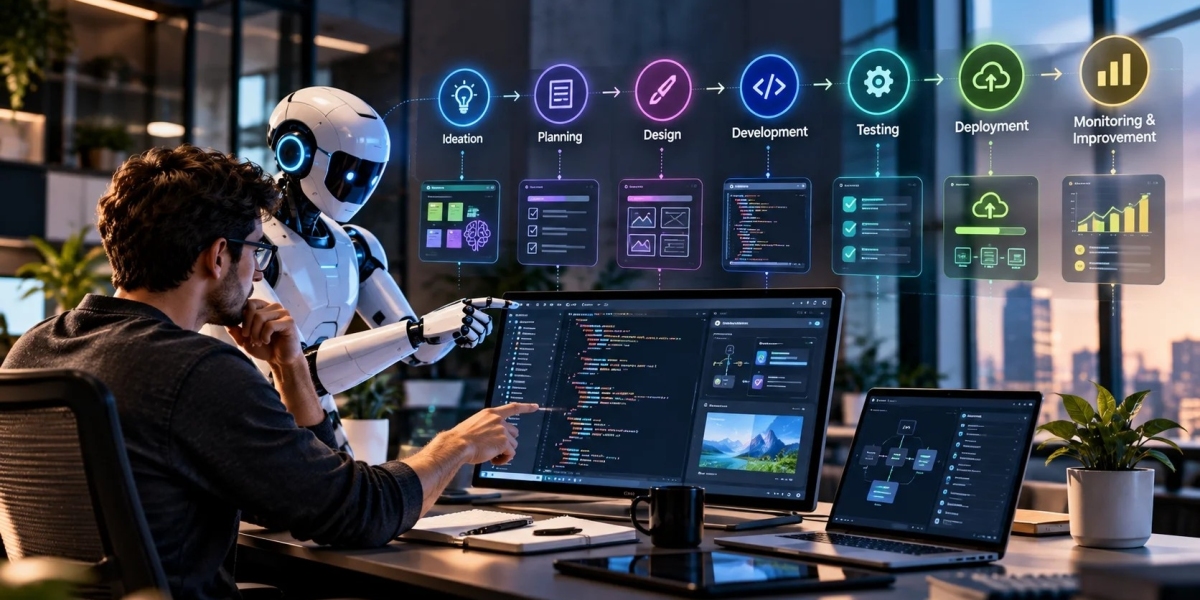

The problem is often not a lack of coding capacity. It is the gap between what stakeholders expect, what developers interpret, and what the finished application actually does.
Specification-driven development addresses this gap by making requirements, design decisions, and acceptance criteria explicit before and throughout implementation. AI-native software development adds another dimension: intelligent tools can help teams interpret specifications, generate implementation assets, detect inconsistencies, and validate results more continuously.
Together, these approaches create a delivery model in which software is guided by clearly defined intent rather than relying primarily on informal communication or individual interpretation. The result can be a more predictable engineering process, provided that AI-generated work remains grounded in verified requirements and human oversight.
What Specification-Driven Product Delivery Actually Means
In a specification-driven workflow, the specification is more than a document created during project discovery. It acts as a reference point for the product's expected behavior, technical constraints, interfaces, and quality standards.
A specification may describe user journeys, business rules, data structures, API contracts, security requirements, performance expectations, and acceptance tests. Each element helps answer a practical question: what must the product do, under which conditions, and how will the team know that it works correctly?
This approach is particularly useful when a product involves several integrations, complex workflows, regulated data, or multiple development teams. Instead of relying on assumptions passed between people, participants can refer to a shared description of the intended system.
AI-native engineering can make this process more responsive. Teams exploring this model can find additional context at https://geniusee.com/ai-native-software-development, where AI is considered part of the broader software development approach rather than simply an optional coding assistant.
How AI Changes the Path From Specification to Implementation
Traditional development often requires engineers to translate requirements into technical tasks manually. AI tools can accelerate parts of this translation, but their greater value comes from connecting different stages of the engineering workflow.
Turning Product Requirements Into Structured Work
A stakeholder might describe a need for a customer portal where users can manage subscriptions, update payment details, and review invoices. An AI-assisted workflow can help transform this description into user stories, functional requirements, workflow diagrams, and preliminary acceptance criteria.
The generated material gives product owners and engineers a starting point for discussion. They can identify missing details before implementation begins: Can users change plans during an active billing period? What happens when a payment fails? Which account roles are allowed to access invoices?
AI does not resolve these business decisions automatically. It helps expose them by organizing information and suggesting questions that might otherwise remain unnoticed.
Generating Implementation Assets From Approved Specifications
Once requirements are reviewed, AI coding tools can assist with producing code, API definitions, database structures, test cases, and technical documentation.
The important distinction is that generated assets should follow an approved specification. Without this constraint, an AI assistant may produce plausible code that solves a slightly different problem from the one the product team intended.
A disciplined workflow therefore treats specifications as the source of truth. Engineers review generated implementation choices, confirm compatibility with the existing architecture, and ensure that changes remain aligned with business requirements.
Keeping Specifications Alive Throughout the Development Cycle
A specification loses much of its value if it becomes outdated as soon as coding starts. AI-native delivery works best when specifications evolve alongside implementation.
Creating a Traceable Development Workflow
Each requirement should connect to the technical tasks, generated code, relevant tests, and validation results associated with it. This creates a traceable relationship between business intent and delivered functionality.
For example, if a subscription platform must automatically suspend accounts after repeated payment failures, the specification should define the triggering conditions, timing rules, customer notifications, and exceptions. The implementation and automated tests can then be checked against those exact expectations.
When a stakeholder changes the suspension policy, the team can identify affected components and tests rather than relying on developers to discover every dependency manually.
Using AI for Continuous Verification
AI agents can review code against specifications, suggest missing test scenarios, identify inconsistencies between documentation and implementation, and help investigate failed tests.
However, generated code should not be considered correct simply because an AI tool reports that it follows the requirements. Deterministic checks remain essential. Unit tests, integration tests, static analysis, security scanning, and performance testing provide independent evidence that the application behaves as expected.
The strongest workflow combines AI-assisted review with automated quality gates and human approval for important architectural or business decisions.
What Changes for Product and Engineering Teams?

Specification-driven AI delivery redistributes responsibilities across the organization.
Product managers spend more time clarifying business outcomes, defining acceptance criteria, and maintaining alignment between stakeholder expectations and product behavior. Architects establish technical boundaries, integration standards, and security principles. Developers use AI to accelerate implementation while concentrating on complex logic, system design, and reviewing generated changes.
Quality assurance also moves earlier in the process. Instead of waiting for a completed feature, testers help define expected behavior and edge cases during specification development. This allows test scenarios to influence implementation from the beginning.
For companies building sophisticated digital products, this collaboration can reduce misunderstandings and make delivery decisions easier to trace. Geniusee, as a software engineering partner working with custom digital solutions and AI-driven technologies, can support organizations in connecting product requirements with practical implementation strategies.
Avoiding the Risks of Over-Specification
A specification-driven approach should not turn every development task into a lengthy documentation exercise. Excessive detail can slow down experimentation, especially when teams are working on prototypes or exploring uncertain product ideas.
The level of specification should reflect the complexity and risk of the work. A minor interface adjustment may need only a short description and clear acceptance criteria. A payment-processing feature, by contrast, requires more extensive coverage of security, failure scenarios, data handling, and integration behavior.
Teams should also avoid treating AI-generated specifications as automatically authoritative. Stakeholders must confirm business assumptions, engineers must validate technical feasibility, and security specialists should review relevant controls.
A useful specification is precise enough to guide implementation but flexible enough to accommodate discoveries made during development.
Making Product Delivery More Predictable
AI-native software development and specification-driven delivery complement each other because they address different parts of the same challenge. AI increases the capacity to generate and modify software, while structured specifications help ensure that this work remains aligned with the intended product.
When requirements, implementation, and validation are connected through a shared workflow, teams can move faster without making code generation the only measure of progress. They can track whether features meet business expectations, understand the impact of changes, and identify quality issues before release.
For organizations seeking to scale AI-assisted engineering, the real opportunity lies in building a repeatable delivery process: define the intent, establish constraints, implement against an agreed specification, and verify the result with measurable evidence.









