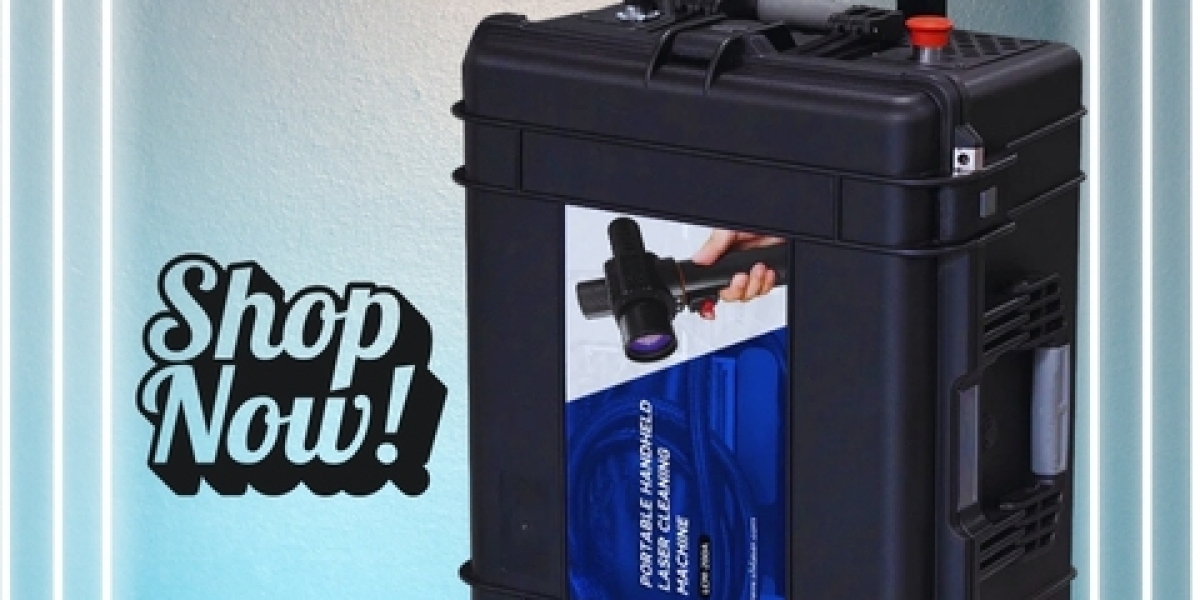

Industrial cleaning has become faster and more efficient with the development of advanced laser technology. A laser cleaner machine is a modern solution designed to remove rust, paint, oil, grease, oxidation, and other unwanted contaminants from different surfaces. It uses a concentrated laser beam to clean materials without relying on traditional chemical cleaners or abrasive methods.
Industries such as automotive manufacturing, metal fabrication, aerospace, construction, and machinery maintenance are increasingly adopting laser cleaning technology to improve their production processes.
What Is a Laser Cleaning Machine?
A laser cleaning machine is an industrial device that uses high-energy laser pulses or continuous laser beams to remove unwanted substances from a material's surface. The process works by directing controlled laser energy toward the contaminated area.
When the laser interacts with rust, paint, dirt, or other deposits, it breaks down or removes the unwanted layer while helping preserve the underlying material when the correct settings are used.
This technology is suitable for cleaning metal surfaces, machinery components, industrial equipment, molds, and various manufactured products.
How Does Laser Cleaning Technology Work?
Laser cleaning works through a process called laser ablation. During this process, laser energy interacts with contaminants on a surface, causing them to separate from the base material.
The operator adjusts parameters such as laser power, scanning speed, frequency, and focus according to the material and cleaning requirements.
Different cleaning applications require different settings. For example, removing thick rust from industrial steel may require different parameters than cleaning delicate metal components or removing thin paint layers.
Common Industrial Applications
A laser cleaner machine can be used across various industries where accurate and controlled surface preparation is important.
1. Rust Removal
Laser cleaning is widely used to remove rust from steel structures, automotive components, metal tools, and industrial machinery. It helps prepare surfaces for painting, welding, and further processing.
2. Paint and Coating Removal
Manufacturers use laser technology to remove old paint, protective coatings, and unwanted surface layers. This is particularly useful when conventional stripping methods are unsuitable.
3. Oil and Grease Cleaning
Industrial components often collect oil, grease, and production residues. Laser cleaning can help prepare these parts for assembly, maintenance, and manufacturing operations.
4. Mold and Tool Cleaning
Molds used in plastic manufacturing, rubber production, and metal processing require regular maintenance. Laser cleaning helps remove accumulated deposits and production residues from mold surfaces.
5. Automotive and Aerospace Industries
Automotive and aerospace manufacturers use laser cleaning for surface preparation, component maintenance, and precision cleaning tasks where controlled processing is essential.
Choosing the Right Laser Cleaning Equipment
Selecting suitable equipment depends on the cleaning application, material type, contamination level, and production requirements.
Before purchasing a laser cleaner machine, consider its laser power, cooling system, cleaning width, portability, control interface, and available safety features.
Common options include handheld laser cleaners for flexible maintenance work and automated systems for large-scale industrial production. Pulsed laser systems are often considered for delicate cleaning applications, while continuous-wave systems can be suitable for certain heavy-duty cleaning tasks.
Laser Cleaning Safety and Maintenance
Laser cleaning equipment requires proper handling and workplace safety procedures. Operators should use suitable laser safety glasses, protective equipment, and appropriate warning signs. The cleaning area should have suitable ventilation or fume extraction to manage particles and fumes generated during operation.
Regular maintenance is also important. Keep optical components clean, inspect cables and connections, monitor the cooling system, and follow the manufacturer's maintenance instructions.
Final Thoughts
Laser cleaning technology is changing how industries approach surface preparation and equipment maintenance. It provides a modern method for removing rust, paint, grease, and other contaminants with controlled laser energy.
Choosing the right laser cleaner machine requires understanding your industrial requirements, material types, and cleaning applications. With suitable equipment, trained operators, and proper maintenance, businesses can integrate laser cleaning into their production processes and achieve consistent surface-cleaning results.