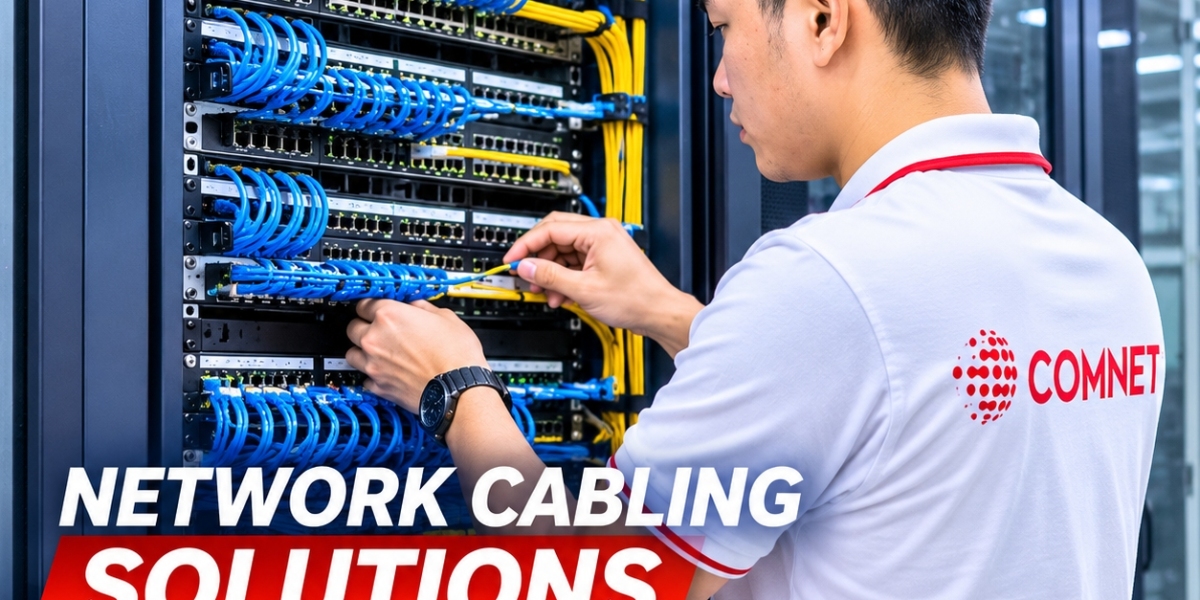

Running a business in Singapore means keeping up with changing technology, customer expectations and increasingly digital operations. Whether you manage a small office, a growing enterprise or a commercial facility, your employees depend on reliable connectivity to communicate, access business applications and complete their daily responsibilities. Behind every stable connection is a physical infrastructure that deserves proper attention.
Many companies invest in faster internet subscriptions, updated computers and modern networking equipment but overlook the importance of their cabling infrastructure. However, even advanced equipment may struggle when the underlying connections are poorly installed or unsuitable for business requirements. Professional network cabling in Singapore provides the foundation for a more organised, dependable and scalable working environment.
The Connection Between Network Infrastructure and Business Productivity
Imagine your employees attending an important video conference when the network suddenly becomes unstable. Your finance team may experience delays accessing cloud accounting software, while your customer service department struggles to retrieve information from internal systems. These situations can affect productivity and create unnecessary frustration throughout the workplace.
Reliable business network cabling helps reduce infrastructure-related connectivity problems by providing properly installed physical connections between network devices. Although cabling alone cannot eliminate every network issue, a well-designed installation gives businesses a stronger foundation for troubleshooting, maintenance and future upgrades.
Supporting Daily Business Operations
Modern offices rely on numerous connected devices, including desktop computers, printers, IP telephones, wireless access points and network storage systems. Each device has different connectivity requirements, and the infrastructure must be planned to accommodate their placement and usage.
A structured installation ensures that network outlets, patch panels and equipment connections are organised rather than added randomly whenever another workstation is introduced. This makes the office easier to manage, particularly when departments expand or employees move between different work areas.
Reducing Unnecessary IT Disruptions
Unlabelled cables, poor terminations and unsuitable cable routing can make network troubleshooting unnecessarily difficult. IT technicians may spend considerable time identifying individual connections before they can even begin resolving an issue.
Professional network cabling services help address these challenges through proper cable management, identification and testing. This approach can make maintenance activities more efficient and reduce avoidable disruption during future network changes.
Choosing the Right Network Cabling for Your Business
Not every organisation needs the same cable specification. A small office may have relatively straightforward connectivity requirements, while a large corporate environment may require higher bandwidth, multiple communication rooms and fibre optic backbone connections.
Cat6 Cabling for Everyday Office Connectivity
Cat6 network cabling remains a practical option for many office environments. It supports common business applications, computers, printers and other Ethernet-connected equipment when installed within the appropriate channel specifications.
For businesses reviewing their existing infrastructure, Cat6 can provide a suitable balance between performance and installation requirements. However, cable selection should always consider the actual network equipment, transmission distance and expected usage.
Cat6A for Higher Network Demands
As businesses introduce more connected devices and bandwidth-intensive applications, Cat6A network cabling may be worth considering. It supports 10 Gigabit Ethernet over standard channel distances of up to 100 metres when the complete channel is designed and installed correctly.
This makes Cat6A a relevant option for businesses planning long-term office infrastructure, particularly where high-performance connections and future expansion are important.
Fibre Optic Cabling for Larger Infrastructure
For connections between floors, buildings and communication rooms, fibre optic cabling offers high bandwidth capacity and suitability for longer-distance transmission.
Depending on the application, businesses may consider multimode or single-mode fibre. The right selection depends on link distance, network equipment, required bandwidth and the building's existing infrastructure.
Why Structured Network Cabling Makes Office Expansion Easier
Business growth often brings changes to office layouts, employee numbers and technology requirements. A company that initially operates from one floor may eventually need additional workstations, meeting rooms and communication facilities.
Without proper planning, each expansion can result in additional cables being installed without a consistent structure. Over time, this may create congestion in ceiling spaces, equipment racks and server rooms.
A professionally designed structured network cabling system provides a more systematic way to manage these changes. With organised distribution points and clearly identified connections, businesses can introduce new equipment without unnecessarily disturbing the existing infrastructure.
Planning for Future Network Requirements
Future-proofing does not mean installing the most expensive cable available. It means making informed decisions based on expected business development and technology requirements.
Companies should consider spare cable pathways, available rack capacity, additional network outlets and potential backbone upgrades. These details may appear minor during the initial installation but can become important when the business expands.
What to Consider Before Hiring a Network Cabling Contractor
Choosing a contractor is an important part of any network infrastructure project. A quotation should not be evaluated on price alone because the quality of planning, materials and installation can influence the reliability and maintainability of the finished system.
Review Technical Experience
Look for a network cabling contractor in Singapore that understands commercial installation requirements and has experience with projects similar to yours.
Ask about the contractor's approach to site assessment, cable routing, equipment room planning and coordination with other building services.
Understand the Scope of Work
A proper quotation should clearly identify the cable category, estimated quantities, installation locations, termination components and testing requirements.
Businesses should also clarify whether patch panels, racks, labelling, testing reports and documentation are included in the proposed scope.
Prioritise Testing and Documentation
Testing is an essential part of a professional cabling project. Depending on the specification, this may include wire mapping, continuity checks, certification testing and fibre testing.
Clear documentation helps IT teams understand the installed infrastructure and makes future maintenance more straightforward.
Why Singapore Businesses Should Review Their Existing Cabling
An ageing network infrastructure does not always fail completely. Sometimes the warning signs appear as intermittent connections, insufficient outlets or difficulty supporting newer network equipment.
If your business is renovating its premises, introducing new technology or expanding its workforce, it is a good opportunity to review the existing cabling arrangement.
A professional assessment can help determine whether individual repairs, additional network points or a wider infrastructure upgrade would be more appropriate.
Frequently Asked Questions
1. Why is network cabling important for businesses?
Network cabling provides the physical connections required for computers, switches, servers and other network devices. Properly designed infrastructure supports organised connectivity, easier maintenance and business expansion.
2. Which network cable is suitable for a modern office?
Cat6 and Cat6A are common options, depending on the required speed, equipment and future capacity. Fibre optic cabling may be more suitable for building backbones and longer-distance connections.
3. How often should business network cabling be upgraded?
There is no universal replacement schedule. Businesses should review their infrastructure when it becomes damaged, no longer meets equipment requirements or requires significant expansion.
4. Does structured cabling improve network speed?
Structured cabling does not automatically increase internet speed. However, correctly selected and installed cabling helps ensure that the physical network infrastructure can support the intended connection performance.
5. Should small businesses invest in professional network cabling?
Yes. Even smaller offices benefit from organised cabling because it simplifies troubleshooting, equipment relocation and future expansion.
Strengthen Your Business Infrastructure with COMNET
Reliable connectivity starts with the right infrastructure. If your company is setting up a new office, upgrading its existing network or planning a larger commercial installation, professional planning can help prevent avoidable cabling problems and support your future technology requirements.
Explore professional network cabling in Singapore through COMNET Systems Pte Ltd. From structured copper cabling to fibre optic infrastructure, businesses can explore suitable solutions through COMNET's structured network cabling services in Singapore. Contact the team to discuss your project requirements and build a more organised, dependable network infrastructure for your business.









