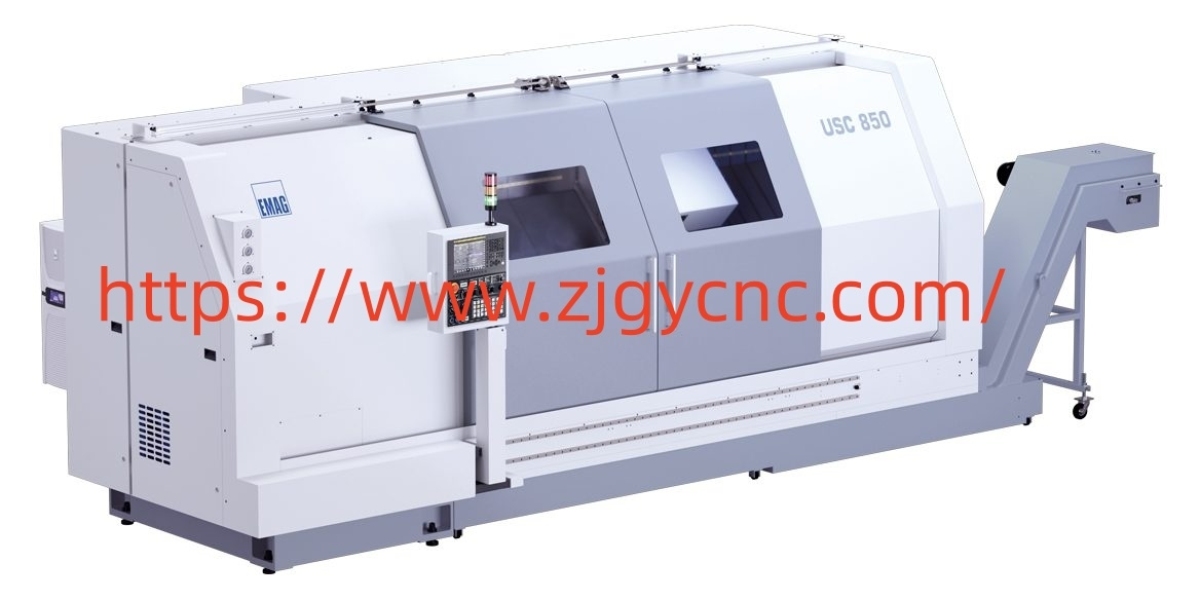

Universal CNC Lathe selection should be based on the workshop's actual machining plans, rather than appearance or purchase price alone. Buyers need to understand workpiece dimensions, material types, required operations, and expected production volume. A clear evaluation of these factors helps manufacturers identify a suitable machine configuration and avoid paying for functions that do not support their daily production activities.
Calculate the Required Working Range
Start by identifying the largest and smallest workpieces that the machine will process. Important measurements include maximum turning diameter, machining length, spindle bore, and the available space for clamping.
Buyers should prepare technical drawings of representative parts. These drawings can show external profiles, internal holes, grooves, threads, shoulders, and other machining details. If a factory handles different product categories, it should identify which parts account for regular production and which are occasional orders.
The working range should provide sufficient room for planned operations without creating unnecessary capacity requirements. Discuss these measurements with the supplier and ask for confirmation against the proposed model specifications.
Consider Material and Cutting Conditions
The material being processed influences tool selection, cutting speed, feed rate, and machining strategy. Aluminum components, steel shafts, stainless steel parts, and brass fittings may involve different processing conditions.
Buyers should explain the material grades and typical workpiece dimensions when requesting a quotation. It is also useful to provide information about the required surface finish and dimensional tolerances.
Ask the manufacturer which machine configuration is appropriate for the intended materials. Discuss spindle power, rigidity, tool compatibility, and available operating ranges together. Evaluating these factors as a group provides a clearer picture than comparing a single specification.
Review Clamping and Workpiece Support
Clamping stability affects how a part is held during machining. Buyers should check chuck size, chuck type, clamping range, and compatibility with the workpiece dimensions.
Long or slender components may require additional support to reduce unwanted movement during processing. Depending on the application, a tailstock or other supporting accessory may be needed.
Consider how frequently the factory changes workpiece types. If production involves different diameters and lengths, the setup process and accessory replacement method should be discussed before purchasing.
Ask the supplier to identify which clamping devices and support accessories are included in the quotation. Separating standard items from optional equipment makes cost comparisons easier.
Evaluate Tool Arrangement and Operation Sequence
The tool configuration should match the operations required for each part. Common tasks include external turning, facing, boring, grooving, and threading.
Prepare a simple operation sequence for representative components. This allows the supplier to understand how many tools are required and whether the proposed tool holder arrangement can accommodate the production process.
Buyers should also consider tool accessibility and replacement convenience. A practical setup can help operators organize different machining steps and manage routine production changes.
If a factory expects to introduce new product designs, discuss possible tooling adjustments in advance. The aim is to select an arrangement that supports current orders while allowing reasonable flexibility for future work.
Check Axis Movement and Positioning Requirements
Axis travel determines the available movement range, while positioning performance affects how the machine approaches specified dimensions. Buyers should review X-axis and Z-axis travel, rapid movement speed, feed settings, positioning accuracy, and repeatability.
These specifications should be compared with the dimensional requirements of the planned parts. A project involving tight tolerances may require more detailed verification than general-purpose turning work.
Request technical documents and ask how the relevant measurements are inspected. If possible, arrange a machining demonstration using a representative drawing to evaluate the machine under conditions similar to the intended application.
Assess Workshop Installation Conditions
Before delivery, check whether the workshop can accommodate the machine. Consider floor space, foundation conditions, power supply, access routes, loading arrangements, and the space needed for maintenance.
The installation plan should also account for operator access and material handling. If the machine is placed near existing production equipment, ensure that there is enough room for workpiece loading, tool replacement, and routine inspection.
For overseas purchases, clarify packaging dimensions and shipment requirements. This information helps the buyer coordinate transport, unloading, and installation preparations.
Confirm Documentation and After-Sales Support
A purchasing agreement should clearly identify the model, machine configuration, included accessories, delivery schedule, warranty terms, and technical documents.
Buyers should ask about operation manuals, electrical diagrams, maintenance instructions, spare parts, and technical assistance. These resources help the production team prepare for installation and organize routine service.It is also important to establish how specification changes are approved. Written confirmation of the final configuration can reduce misunderstandings between purchasing, engineering, and manufacturing teams.Zhejiang Guoyu CNC Machine Tool Co., Ltd. provides turning equipment information for industrial buyers evaluating different workshop requirements. Visit https://www.zjgycnc.com/ to review available machine options and contact zjgycnc about workpiece drawings, technical specifications, configuration details, and purchasing arrangements.








