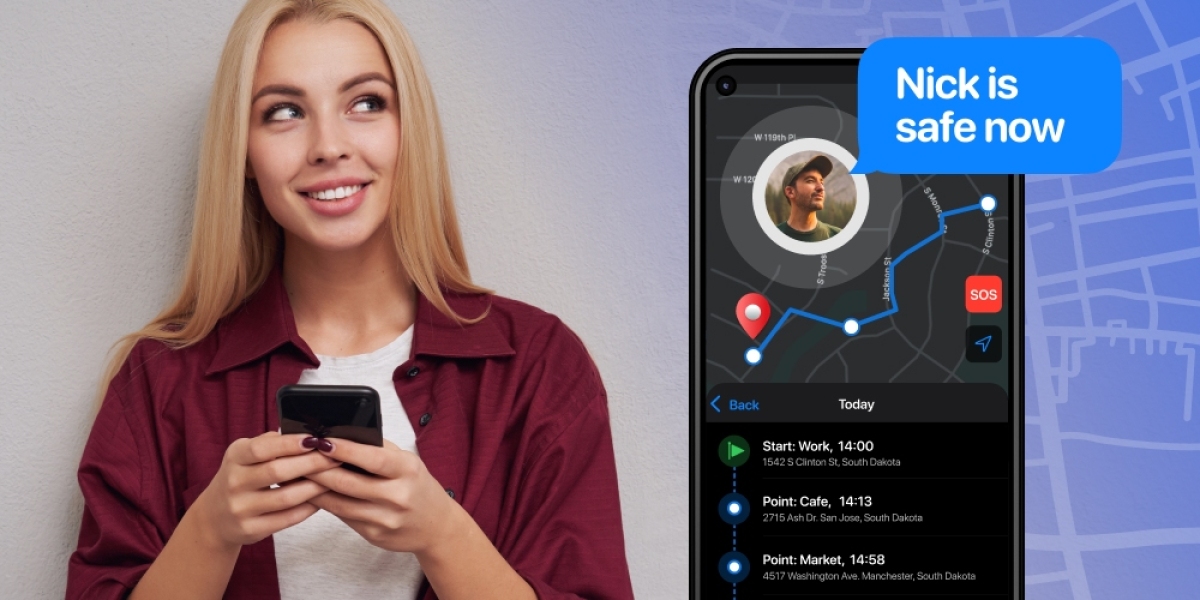

GPS phone tracking has become an increasingly familiar part of family safety technology, giving parents a way to stay informed about a child's location during school commutes, family outings, and everyday travel. As more services enter the market, parents are increasingly looking beyond simple location displays and considering accuracy, privacy, security, battery usage, and responsible use.
GPS phone tracking apps can help parents understand where a child's smartphone is located, review previous locations, establish geographic boundaries, and receive alerts when a device enters or leaves a designated area. However, the usefulness of these features depends on the technology behind them and how families choose to use them.
"Parents should look at GPS tracking as one component of a broader safety strategy rather than as a replacement for communication and trust." Understanding what an app collects, how frequently it updates location information, and how that information is protected is just as important as the tracking feature itself."
Accuracy and Real-Time Updates Matter
One of the first factors parents should examine is location accuracy. GPS services can use satellite positioning, Wi-Fi networks, cellular information, or a combination of technologies to estimate a device's location.
Environmental conditions, connectivity, phone settings, and battery-saving features can affect location information. Parents should therefore understand that a displayed location may not always represent the phone's precise position at that exact moment.
Real-time location updates can be particularly useful during everyday routines. A parent may want to confirm that a child has arrived at school or reached home safely without repeatedly calling or messaging.
FonSee is among the parental monitoring platforms that incorporate GPS location functionality alongside other device-safety features. Its inclusion of location tracking reflects a broader trend toward combining several family safety tools within a single platform.
Location History Can Provide Additional Context
While real-time tracking can provide immediate information, location history can offer a broader view of previous movements.
For example, parents may use location history to understand a child's journey between school and home or confirm that a planned route was followed.
At the same time, parents should consider how much historical information they actually need. Location data is sensitive, and families should pay attention to how long information is stored and who has access to it.
Geofencing Can Reduce the Need for Constant Checking
Another feature parents may want to consider is geofencing. Geofencing allows users to define a geographic area, such as a home, school, or another regular destination. Depending on the service, parents can receive an alert when a tracked device enters or leaves that area.
This can be useful for families with established routines. Instead of continuously checking a map, parents can receive relevant notifications when a predefined location event occurs.
However, parents should review how these alerts work and whether they can customize notification settings to avoid receiving unnecessary updates.
Battery Usage Should Not Be Overlooked
GPS and background location services can consume smartphone battery power. Frequent location updates may increase battery usage, potentially reducing the availability of the device when it is needed most.
Parents considering a tracking app should therefore examine how frequently location information is refreshed and whether the application provides settings that allow users to balance tracking requirements with battery life.
Basic habits remain important as well. Keeping a child's phone charged before school, travel, or extracurricular activities can be just as important as having a tracking application installed.
Privacy Is a Central Consideration
Location information can reveal detailed patterns about where a person lives, studies, travels, and spends time. For that reason, parents should examine an app's privacy and data-handling practices before using it.
Questions worth considering include what information the service collects, how it is protected, who can access it, and how long it is retained.
Parents should also review account-security features and use strong passwords. Where additional authentication options are available, enabling them can provide another layer of protection.
Compatibility Can Affect the Experience
Before selecting a GPS tracking app, parents should confirm that it supports the child's smartphone and operating system.
Compatibility can vary between services, and certain features may only be available on specific devices or operating-system versions.
Checking these requirements before subscribing can help families avoid purchasing a service that does not provide the expected functionality.
More Features Do Not Always Mean More Value
Modern parental safety platforms may combine GPS tracking with features such as app usage information, screen-time management, website filtering, activity reports, and other device-management functions.
This broader approach is reflected by services such as FonSee, which combines GPS tracking with additional parental monitoring capabilities.
For some families, having several safety tools within one platform may be convenient. Others may only require basic location functionality. The appropriate choice ultimately depends on the family's specific needs, the child's age, and the level of monitoring that parents consider reasonable.
Responsible Tracking Includes Communication
Technology alone cannot create a safe digital environment.
Parents may also want to explain location tracking to their children and establish clear expectations about when and why tracking is being used. Open conversations can help children understand that the purpose of the technology is related to safety rather than simply surveillance.
As children grow older, families can also reconsider their tracking arrangements and adjust them as appropriate.
GPS Tracking Is One Layer of Family Safety
GPS phone tracking can provide useful information, but it has limitations. A phone may lose connectivity, run out of battery, have location services disabled, or provide an outdated location.
For that reason, parents should not treat a tracking application as a substitute for direct communication or emergency services.
Instead, GPS technology can form one layer of a broader family-safety plan that includes communication, responsible smartphone habits, privacy awareness, and age-appropriate digital boundaries.