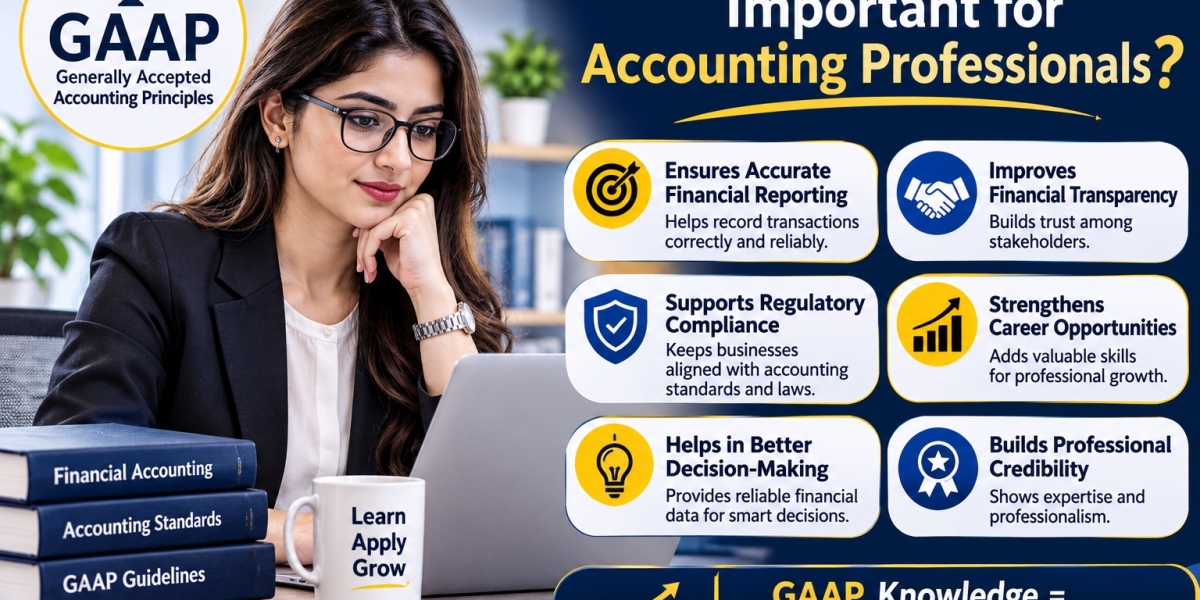

Accounting professionals are pivotal in ensuring businesses maintain correct financial records and prepare statements as per the applicable accounting standards. One of the major accounting frameworks that they need to understand is Generally Accepted Accounting Principles (GAAP).
GAAP is a frame work of accounting principles and guidelines that organizations may use to ensure consistency, accuracy, and transparency in their financial reporting. Having a command on GAAP principles help accounting professionals perform their day-to-day tasks and assist management in making sound financial decisions.
Importance of Understanding GAAP
Generally Accepted Accounting Principles (GAAP) outline key standards that govern the recording, presentation, and reporting of organizations’ financial information. GAAP helps accounting professionals in understanding the standards that are required for reporting financial information.
Management makes financial decisions based on the information reported. In the absence of knowledge on accounting standards, there may be inconsistency in financial reporting, which may cause errors and confusion for the organization and its stakeholders.
Promotes Accuracy in Financial Reporting
One of the core responsibilities of accounting professionals is maintaining the accuracy of an organization’s financial records. Generally Accepted Accounting Principles (GAAP) provide a framework that helps accounting professionals record the transactions accurately and prepare financial statements that are understood and accepted by the users of the financial statements.
By adhering to GAAP principles, accounting professionals can achieve completeness and accuracy of financial records and ensure that the financial information reports the organization’s true and fair financial position. Accurate reporting helps businesses owners understand their income, expenses, assets and liabilities.
Financial Transparency
Transparency in the financial aspects of the business helps builds the relationship between the business and its stakeholders e.g. employees, investors and the community. When businesses follow the generally accepted accounting principles (GAAP), accounting professionals are able to represent financial information in formats that are clear and simple to understand. This enables users to understand and evaluate a business' financial performance.
Maintaining credibility in the business is important to gain and retain customers. Understanding GAAP helps accounting professionals ensure that financial statements contain relevant and reliable information.
Aiding Regulatory Compliance
Understanding GAAP helps accounting professionals understand the accounting requirements of their companies. This helps account for the correct financial documents, and eliminate or reduce the likelihood of accounting mistakes and violations.
In the course of their duties, knowing GAAP enables accounting professionals to ensure that financial statements are prepared in adherence to the required accounting standards. Knowledge of GAAP is an asset for professionals in accounting, auditing, finance, and financial management. Employers look out for these skills when hiring.
Understanding GAAP enables professionals to explore various careers such as financial accounting, accounting management, financial analysis, auditing, tax accounting and financial reporting. Developing knowledge of GAAP is particularly essential for new graduates and prospective accountants as it builds a solid base for their career.
Assists in Better Financial Decision-Making
There is more to accounting than keeping financial records. They also give financial information that helps in business decision making. The evaluation of business performance and risk by management requires the use of GAAP-based financial statements. The identification of financial risks and management of expenses is also done by management. Furthermore, GAAP-based financial statements give management the opportunity to plan on the capital structure of the business and make decision on future financial investments. With the preparation of accurate financial statements, management is in a position to make informed decisions.
Builds Professional Credibility
Professional credibility helps to build a successful career in accounting. Knowledge of GAAP demonstrates to an employer that one can maintain professionalism and be trustworthy in the handling of financial information. Being updated with the recent happenings in the world of accounting is key in being competent in the accountancy world.
Conclusion
Knowledge of GAAP affects the financial wellbeing of an organization, user confidence in the fairness and integrity of financial reports, marketplace transparency, adherence to the laws and regulations of different jurisdictions, and aiding management make informed and strategic decisions that drive growth.