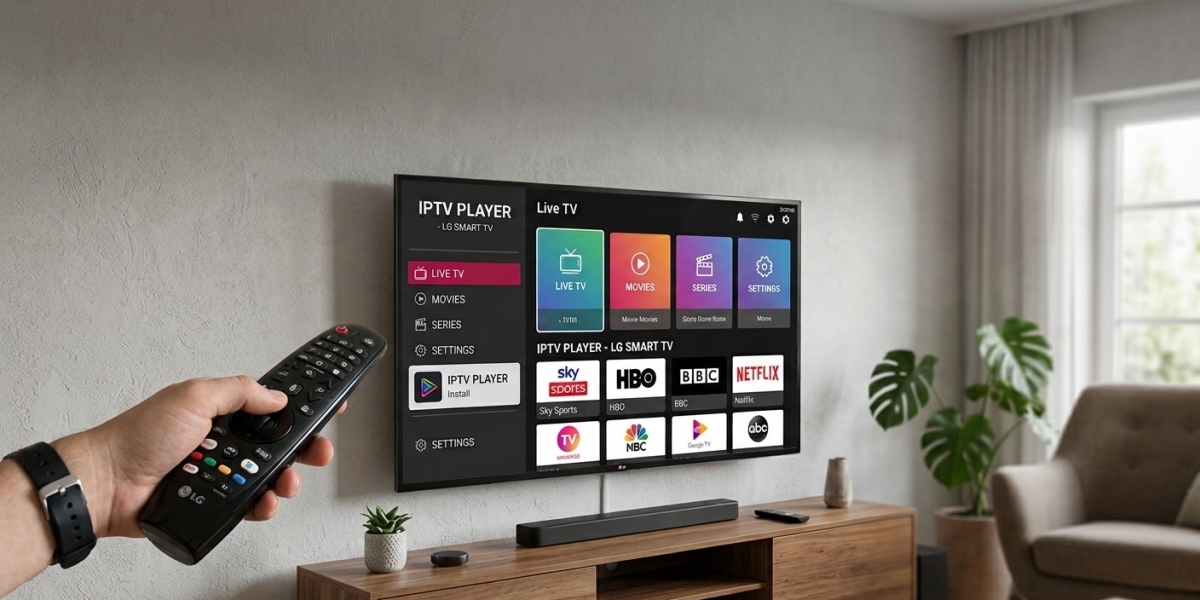

Choosing an IPTV service can be confusing, especially when two providers advertise similar packages but offer different television channels. One service might include popular Canadian entertainment networks, international programming, and live sports, while another may provide a completely different selection.
Understanding IPTV Canada channel availability helps viewers make better decisions before choosing a subscription. Channel differences are not necessarily related to the number of channels advertised. They can depend on broadcasting rights, regional licensing agreements, content distribution arrangements, provider infrastructure, and subscription packages.
For Canadian viewers, these differences are particularly important because television preferences vary between households. Some people prioritize Canadian news and local programming, while others prefer international entertainment, movies, sports, or multilingual channels.
In this guide, we explain why IPTV channels differ between providers, what affects channel availability, and how to evaluate a channel lineup before purchasing a subscription.
What Determines IPTV Channel Availability?
IPTV channel availability refers to the television networks and live programming a provider makes accessible through its streaming service.
Unlike traditional cable television, which generally distributes channels through established cable infrastructure, IPTV delivers television content using internet-based networks.
However, having an internet connection does not automatically mean every provider can offer every television channel.
Several factors influence the available channel selection.
1. Broadcasting and Distribution Rights
One of the biggest reasons channels differ between providers is content licensing.
Television networks and content owners control how their programming can be distributed. Providers generally need appropriate agreements or authorization to distribute channels and programs.
These agreements can determine:
Which television channels a provider can distribute.
Which countries or regions can access specific content.
Whether live programming is permitted.
How long distribution rights remain valid.
Whether additional restrictions apply to particular programs.
For example, a broadcaster may authorize one distributor to offer its channel in Canada but not grant the same rights to another service.
As a result, two IPTV subscriptions may advertise different channel selections even when they target the same Canadian audience.
2. Regional and Geographic Restrictions
Geographic restrictions also influence television channel availability.
Some broadcasters distribute content according to specific geographic territories. A channel available in one country may not be authorized for distribution in another.
Canadian viewers may encounter regional differences involving:
Local television stations.
Regional news broadcasts.
Sports programming.
International entertainment networks.
Country-specific television services.
For example, a television network may have different distribution arrangements in Canada, the United States, and Europe.
This means that a channel lineup designed for American viewers may not provide the same programming options as one intended for Canadian households.
3. Provider Partnerships and Content Agreements
Not every IPTV provider has access to the same content distribution partnerships.
Some services establish agreements with broadcasters, television networks, and authorized content distributors. Others may have more limited content arrangements.
The strength and scope of these relationships can directly affect the channels included in a subscription.
Viewers should remember that a large channel list does not automatically indicate that a provider has reliable or authorized access to every advertised network.
Why Do IPTV Canada Providers Offer Different Channel Lineups?
Even when providers target the same country, their channel packages can vary significantly.
Understanding these differences helps Canadian consumers evaluate subscriptions more carefully.
Different Subscription Packages
Many television services organize their channels into different subscription tiers.
A basic package may focus on general entertainment and news, while a premium package may include additional sports, movies, or specialized programming.
For example, one provider might organize its packages around:
Canadian entertainment.
International television.
Sports and live events.
Movies and television series.
Family and children's programming.
Another provider may combine several categories into a single package.
When comparing services, check the actual channel list rather than relying only on package names.
Different Target Audiences
Providers often design their channel selections around the interests of particular audiences.
Some services primarily target Canadian households looking for domestic television programming. Others may focus on viewers interested in international content.
Common audience preferences include:
Canadian viewers: Local news, Canadian entertainment, national programming, and regional broadcasts.
Sports fans: Authorized sports networks, live sporting events, and sports-related programming.
International audiences: Television networks from different countries and languages.
Families: Children's programming, educational content, documentaries, and general entertainment.
These different priorities explain why two services can offer completely different channel selections without necessarily targeting the same customers.
Different Content Distribution Models
Providers may also use different distribution arrangements.
Some offer traditional live television channels, while others combine live broadcasts with on-demand libraries and additional streaming features.
A service offering a large on-demand collection may not necessarily have the same live channel selection as a service focused on television broadcasting.
For this reason, viewers should evaluate live TV and video-on-demand availability separately.
How Canadian Viewers Can Evaluate a Channel List
Before selecting a subscription, Canadian viewers should carefully examine the available channels.
A detailed channel list provides more useful information than a general advertisement claiming to offer thousands of channels.
Here are some practical steps.
1. Check Canadian Channel Availability
Start by identifying the Canadian television networks you actually want to watch.
Consider whether you need:
Canadian news and current affairs.
Entertainment and lifestyle channels.
Regional television stations.
Children's programming.
Documentaries.
Authorized sports broadcasts.
Do not assume that a provider includes every popular Canadian network simply because it advertises a Canadian subscription package.
2. Look for International Channels
If you enjoy international television, check whether the provider offers programming from your preferred countries.
For example, some viewers may be interested in television content from the United Kingdom, the United States, Europe, Asia, or other regions.
Also consider language availability. A channel list may contain international networks, but that does not guarantee that it includes the specific language or programming you prefer.
3. Verify Individual Channels
Do not rely entirely on promotional screenshots or general channel counts.
Ask the provider for a current channel list and verify whether your preferred networks are included.
It is also worth checking whether the advertised channels are officially authorized for distribution in Canada.
4. Check Regional Programming
Some channels have multiple regional versions.
A network may offer different programming depending on the region, broadcasting rights, or local distribution arrangements.
If regional content is important to you, confirm which version is included rather than assuming every version provides identical programming.
5. Ask About Channel Updates
Television distribution agreements can change.
Channels may occasionally be added, removed, or replaced because of licensing changes, broadcaster decisions, or technical issues.
Ask whether the provider publishes channel updates and how subscribers are informed about changes.
Does a Higher Channel Count Mean Better IPTV Service?
Not necessarily.
One common mistake is choosing a subscription based entirely on the number of advertised channels.
A provider might advertise thousands of channels, but that number alone does not tell you whether the selection is useful, reliable, or legally distributed.
A smaller, carefully organized lineup may be more valuable than a much larger list containing duplicate, unavailable, or irrelevant channels.
Consider these factors when comparing channel selections:
| Evaluation Factor | What to Check |
|---|---|
| Channel relevance | Are your preferred networks included? |
| Canadian coverage | Are suitable Canadian channels available? |
| Licensing | Is the content properly authorized? |
| Streaming quality | Is the picture consistently clear? |
| Channel organization | Are channels easy to find? |
| Reliability | Are live channels consistently accessible? |
| Support | Can the provider resolve channel-related issues? |
The goal should be to find a service that offers the programming you actually want rather than simply selecting the package with the highest advertised number.
Why Can Channels Disappear or Become Unavailable?
Another common concern among IPTV subscribers is when a previously available channel suddenly stops working.
There are several possible explanations.
Licensing Agreement Changes
Broadcasting agreements can expire or change over time.
If a distributor loses authorization to distribute a particular channel, that channel may need to be removed from its service.
This is one reason channel availability should never be considered permanently guaranteed.
Technical and Streaming Problems
Sometimes a channel appears in the channel list but does not play correctly.
Possible technical causes include:
Server maintenance.
Network interruptions.
Temporary broadcaster outages.
Streaming infrastructure problems.
Application compatibility issues.
Internet connection instability.
These problems do not necessarily mean that the channel has been permanently removed.
Regional Availability Changes
A channel may also become unavailable because of geographic restrictions or changes in distribution permissions.
For example, a broadcaster may update the territories in which its content can legally be distributed.
Subscribers should contact the provider for clarification instead of assuming that every missing channel represents a technical problem.
How Internet Speed Affects Channel Viewing
Although internet speed does not determine which channels a provider is legally authorized to distribute, it can affect the viewing experience.
A channel may be included in a subscription but still experience buffering, freezing, or reduced picture quality because of network conditions.
For Canadian households, several factors can influence streaming performance:
Available download speed.
Wi-Fi signal strength.
Router performance.
Network congestion.
Number of connected devices.
Streaming resolution.
For example, a household streaming HD content on multiple devices may need more bandwidth than someone watching a single standard-definition stream.
A stable broadband connection, updated router, and reliable streaming device can help reduce playback problems.
However, faster internet cannot fix a channel that has been removed or is not included in the subscription.
Important Legal Considerations When Choosing an IPTV Provider in Canada
Channel availability should also be considered from a legal perspective.
Not every service advertising television channels has permission to distribute the content it offers.
In Canada, copyright law and broadcasting regulations are relevant to the distribution of television programming.
Consumers should look for providers that can explain their content distribution rights and operate through appropriate licensing arrangements.
Before subscribing, consider these precautions:
Check whether the provider identifies its business and service clearly.
Ask how its television content is licensed.
Review its terms and conditions.
Avoid services making unrealistic promises about unlimited premium content.
Be cautious of providers that cannot explain their distribution arrangements.
Review payment terms and cancellation policies before purchasing.
A professional-looking website or large channel list does not independently establish that a service is authorized.
Choosing a legitimate provider helps support content creators, broadcasters, and the wider television industry.
Practical Tips for Choosing the Right IPTV Channel Package
Selecting a suitable television package becomes easier when you focus on your actual viewing requirements.
Here are some recommendations for Canadian consumers.
Make a list of preferred channels: Identify the networks you watch regularly instead of focusing on total channel numbers.
Compare similar packages: Check whether competing providers offer the same channels and programming categories.
Review live and on-demand options: Determine whether you need live television, movies, series, or a combination.
Check device compatibility: Confirm that the service supports your television, streaming device, or other equipment.
Ask about content licensing: Make sure the provider can explain its authorization to distribute the channels.
Understand subscription conditions: Review billing frequency, renewal terms, cancellation procedures, and refund policies.
Check customer support: A provider should offer a clear way to report missing channels or technical problems.
Taking these steps can help you avoid choosing a subscription that looks attractive in advertisements but does not meet your actual requirements.
Frequently Asked Questions (FAQs)
1. Why do IPTV providers offer different channels?
IPTV providers can have different channel lineups because of broadcasting licenses, distribution agreements, regional restrictions, subscription packages, and content partnerships. Each provider may have permission to distribute a different selection of television networks.
2. Are all Canadian channels available through IPTV?
No. Channel availability depends on the provider's distribution rights, agreements, and package structure. Some Canadian networks may be available through one authorized service but not another.
3. Why do some IPTV channels disappear?
Channels may disappear because of expired licensing agreements, changes in distribution permissions, technical interruptions, or broadcaster decisions. Contact the provider to determine whether the issue is temporary or permanent.
4. Does more channels mean better IPTV quality?
No. A higher channel count does not automatically mean better service. Channel relevance, streaming reliability, picture quality, licensing, and customer support are more meaningful factors when comparing providers.
5. How can I check whether an IPTV provider offers my preferred channels in Canada?
Request an updated channel list and check whether your preferred networks are included. Ask about regional versions, licensing authorization, live streaming availability, and package restrictions before subscribing.
Conclusion
Understanding channel availability is an important part of choosing the right television service. Different providers can offer different channel selections because of broadcasting rights, regional restrictions, content agreements, subscription packages, and technical arrangements.
For anyone comparing IPTV Canada services, the best approach is to look beyond advertised channel numbers and focus on the networks that matter most to their household.
Check Canadian and international channel availability, review licensing arrangements, compare subscription conditions, and evaluate streaming reliability before making a decision.
Ultimately, a suitable television service should provide relevant programming through reliable and properly authorized distribution. By understanding why channel lineups differ between providers, Canadian viewers can make more informed decisions and choose a subscription that better matches their entertainment preferences.









