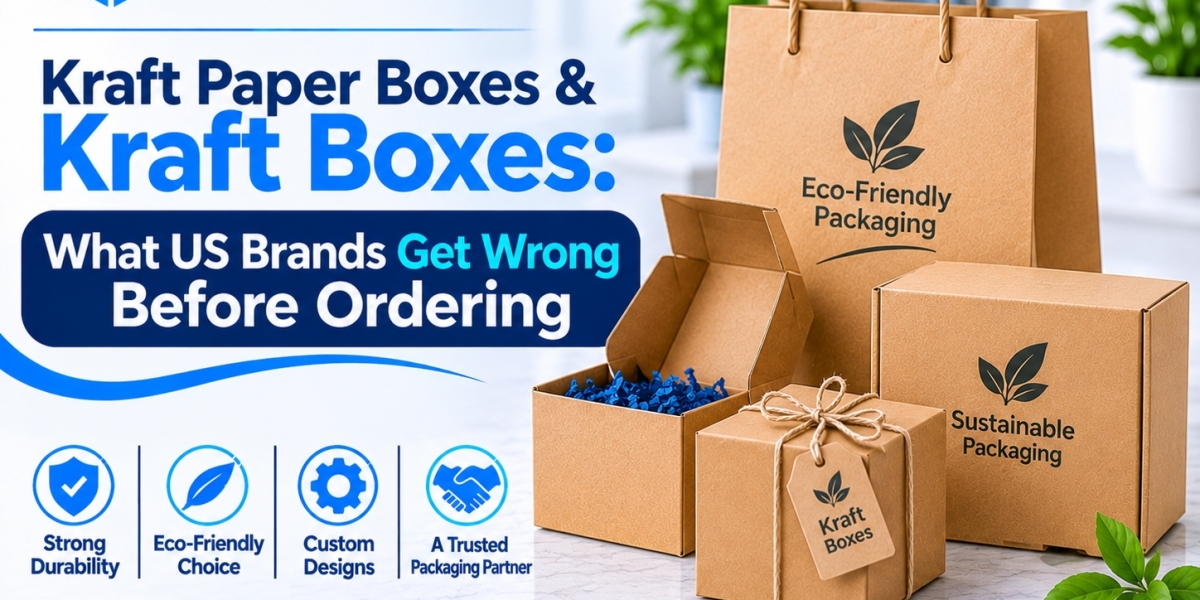

A brand orders kraft boxes because the natural brown texture looked perfect in the mockup. Six weeks later, the boxes arrive wavy, the corners are soft, and the printed logo has gone muddy against the brown background.
I have seen this story repeat with US brands across every category-candles, apparel, baked goods, cosmetics. Kraft paper boxes are one of the most versatile packaging options available. They are also one of the most misunderstood.
Here is the thing: kraft boxes aren't a single product. They are a material family with real trade-offs. Uncoated kraft behaves differently from coated kraft. Light logos print differently than dark ones. A kraft box that works in a dry warehouse fails in a humid one.
At Packaging Boxes, we supply kraft lines to US sellers whfo need flexibility-no minimum order, fast turnaround, and free design support. Before you order from anyone, here is what actually matters.
Kraft Paper Boxes: What You Are Actually Buying
Kraft paper is made from wood pulp processed with sulfate. The natural unbleached version is that familiar brown. Bleached kraft is white. The paper is then formed into boxes-either as folding cartons, corrugated mailers, or wrapped rigid boxes.
That is the technical version. Here is the practical one.
Uncoated kraft absorbs moisture. That is its biggest weakness. In a humid fulfillment center or a garage-based storage setup, uncoated kraft softens. Panels warp. Corners lose their crispness. The lid doesn't sit flush anymore. I have seen brands store kraft boxes over summer and open them in October to find wavy panels that won't assemble cleanly.
The fix is straightforward: ask for coated kraft or a moisture-resistant liner if you are storing boxes for more than a few weeks. Or order smaller batches so inventory turns faster. Custom kraft paper boxes work beautifully when you respect what the material does.
Kraft shows grease and oil. If your product has any fat content-baked goods, cosmetics with oils, candles with wax-kraft will show a stain before the customer opens the box. White SBS board wipes clean. Kraft doesn't. For food and cosmetic brands, this matters more than you would think.
Kraft shifts your brand colors. That brown background changes how ink reads. Dark colors-navy, black, deep green-print well. Light colors-pastels, white, pale yellow-need a white ink base layer, which adds cost and production time. A pastel pink logo on white board becomes muddy on kraft. Know this before you approve artwork.
Kraft Boxes: Where They Work and Where They Don't
Kraft isn't a default. It is a specific material choice that fits some products and channels better than others.
Kraft works for: rustic and natural brands, farmers markets, Etsy sellers, sustainable positioning, organic food products, handmade goods, and anything where the brown texture signals authenticity.
Kraft struggles with: humid storage, long inventory cycles, light-colored logos, greasy products, and premium retail shelves where the box needs to feel expensive. Kraft reads as "honest" and "handmade," not "luxury."
The middle ground is coated kraft. Coated kraft gives you the brown texture with a moisture barrier. It costs more than uncoated but solves the warping problem. If you love the kraft look but need reliability, coated kraft is the answer.
Corrugated kraft is different from folding carton kraft. A corrugated kraft box has flutes between layers of kraft paper. It is stronger, better for shipping, and still recyclable. A folding carton kraft box is single-layer paperboard. It is lighter, cheaper, and fine for retail but not for shipping without an outer box. Know which one you are ordering.
The Printing Question: Why Kraft Artwork Fails
This is where most brands get into trouble. You design artwork in Illustrator or Canva. It looks great on a white background. You upload it. The proof comes back and something is off-the colors are muted, the white text is barely visible, the whole design looks muddy.
That is because kraft isn't white paper. It is brown. Every ink color sits on top of that brown base and shifts.
Dark colors work. Navy, black, deep green, burgundy-these read cleanly on kraft.
Light colors need a base. White, pastel, and light gray require a white ink layer printed first. That adds cost and production time. Some suppliers won't mention this until you have already approved the proof.
Photographs and gradients struggle. Full-color images look muted on kraft. If your brand relies on photography, white SBS or coated board gives you accurate color. Kraft works better with solid colors, line art, and simple typography.
My advice: design for kraft specifically, not for white paper. Use the brown as part of the design. Let it show through. A logo that uses negative space-where the kraft shows through the letters-looks intentional and premium. A logo printed in white on kraft looks like an afterthought.
Materials: Kraft vs. White SBS vs. Corrugated
Kraft folding cartons are the budget workhorse. Recyclable, affordable, and the brown texture photographs well. Downside: moisture sensitivity, grease show-through, and color shift.
White SBS (solid bleached sulfate) is the premium folding carton material. Bright white, excellent print fidelity, grease-resistant with coating. More expensive than kraft. The right call when color accuracy and a clean look matter more than the natural aesthetic.
Corrugated kraft is the shipping material. Fluted construction absorbs shock. The right call for direct-to-customer orders where the box needs to survive transit.
Rigid kraft-wrapped boxes combine the kraft look with premium structure. Thick chipboard wrapped in kraft paper. These work for gift sets and retail displays where you want the natural aesthetic without the flimsiness of a folding carton.
Why US Brands Order From Packaging Boxes
I'll be direct because you can get "premium quality" from anyone's homepage.
No minimum order. Testing a new kraft design or a seasonal product? Order a small run and see how customers respond before committing to inventory you haven't validated. No MOQ kraft paper boxes and no minimum kraft boxes change the math for small brands.
Fast standard turnaround. Seasonal drops, market prep, and restocks-you can't wait weeks for packaging. Our timeline is on the quote.
Free dieline and digital proof. Send your dimensions. Get a dieline you can drop artwork into. Approve a 3D mockup before anything prints. No surprise setup fees.
Free shipping across the USA. Packaging costs already eat into margins. Kraft paper boxes with free shipping and kraft boxes with free shipping keep the landed cost predictable.
Free design support. Can't visualize the finished box? Our team provides templates, mockups, and revisions before production starts.
Reliable customer support. You'll have questions about coatings, print colors, and storage. Our team answers them quickly.
The trade-off? We're not the cheapest per-unit at massive volumes. High-volume buyers with rigid specs can find lower quotes elsewhere. For brands doing small-to-mid runs, the flexibility usually beats the per-unit savings.
The Detail That Saves You Money: Coatings and Liners
Most kraft box failures happen because the material wasn't spec'd for the product or the environment.
For food and cosmetics: ask for grease-resistant coating or a food-grade liner. It stops oil bleed-through and keeps the box looking clean.
For humid storage: ask for coated kraft or moisture-resistant liner. It stops warping and keeps the box structure intact.
For light-colored logos: ask about white ink base layers. It adds cost but keeps your brand colors accurate.
These specs aren't glamorous. But they're the difference between a box that looks professional and one that looks like it sat in a garage for six months.
Quick Answers to What US Brands Actually Ask
Are kraft boxes good for shipping?
A corrugated kraft box is good for shipping-the flutes absorb shock. A folding carton kraft box is not a shipping box. It needs an outer corrugated shipper or a padded mailer.
Why does my artwork look different on kraft?
Kraft is brown, not white. Light colors and photographs shift on the brown background. Dark colors print well. Light colors need a white ink base layer. Design for kraft specifically, not for white paper.
What's the difference between kraft paper boxes and white SBS boxes?
Kraft paper boxes are unbleached brown paperboard-natural look, lower cost, moisture-sensitive, limited color fidelity. White SBS boxes are bleached white paperboard-bright white, accurate color printing, grease-resistant with coating, higher cost.
How long does production and shipping take?
We offer fast standard turnaround times after proof approval, plus free shipping anywhere in the USA. Rush options available if you ask upfront.
Bottom line: A kraft box that warps in storage and a kraft box that makes your logo look muddy fail for different reasons-but both cost you money. Don't order from a supplier who won't show you a dieline, won't give you a proof, and won't tell you the turnaround before you pay.
Packaging Boxes does all three. Send your product dimensions, your storage setup, and your artwork. We'll spec the right kraft box-coated or uncoated, folding carton or corrugated-and get you a quote. No minimum, no pressure.