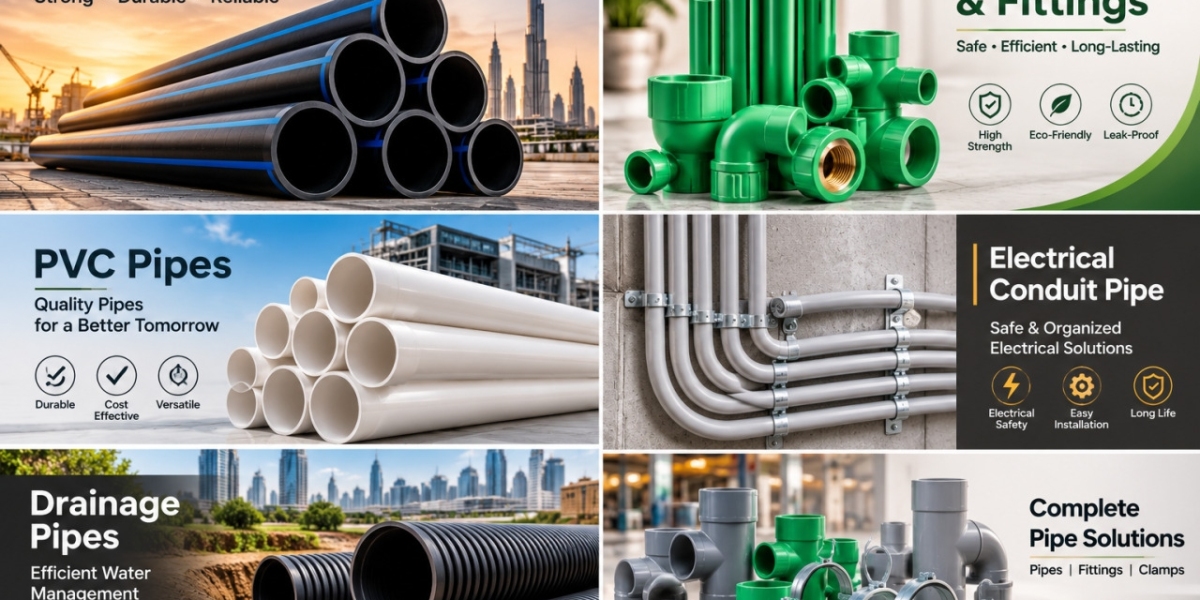

Choosing the right piping material is an important decision for construction, water distribution, irrigation, drainage, and industrial projects. The right pipe needs to handle the required pressure, environmental conditions, installation method, and expected service life. hdpe pipe has become a widely considered option because high-density polyethylene offers a combination of strength, flexibility, corrosion resistance, and relatively lightweight handling. In the UAE, polyethylene piping is used across a range of utility and infrastructure applications, while Dubai Municipality guidelines also identify HDPE among preferred materials for several sewer applications.
Understanding HDPE Piping
HDPE stands for high-density polyethylene. It is a thermoplastic material manufactured into piping systems for applications where durability and dependable flow are important. Depending on the project requirements, pipes can be produced in different diameters, pressure ratings, wall thicknesses, and standard dimension ratios.
One of the major advantages of polyethylene systems is their ability to provide a practical solution for both above-ground and underground installations. For example, UAE water-supply specifications recognize polyethylene pipes and fittings for potable-water applications when they meet the required standards and specifications.
The appropriate product should always be selected according to the project design rather than simply choosing a pipe based on size or price.
Where These Pipes Are Commonly Used
HDPE systems are suitable for a variety of infrastructure requirements. Common applications include:
Water distribution networks
Irrigation systems
Industrial water lines
Wastewater and sewage systems
Fire-water networks
Utility infrastructure
Certain chemical and process applications
Underground pipelines
Dubai Municipality's sewerage design guidelines list HDPE among the preferred materials for several sewer main and house-connection applications, including both conventional open-trench and certain trenchless installation methods.
This versatility makes polyethylene piping useful for residential developments, commercial buildings, industrial facilities, infrastructure projects, and utility networks.
Key Benefits of HDPE
1. Resistance to Corrosion
Unlike conventional metallic piping, polyethylene does not rust. This is particularly useful in environments where moisture, chemicals, soil conditions, or other corrosive factors may affect conventional materials.
For underground utility systems, corrosion resistance can help reduce concerns associated with external environmental exposure.
2. Flexibility
HDPE is more flexible than many rigid piping materials. This characteristic can be valuable when pipelines need to follow a particular route or when installation conditions require some degree of bending.
Flexibility can also be useful in projects where trenchless installation techniques are considered, subject to engineering requirements and the specific product specification.
3. Long-Term Durability
Quality polyethylene piping is designed to provide long-term service when correctly selected, installed, and operated. Manufacturers produce different grades and pressure classes to suit particular project requirements.
For example, PE100 products are commonly manufactured according to recognized standards such as ISO 4427 for water-supply applications.
4. Lightweight Handling
Compared with many traditional piping materials, polyethylene pipes can be relatively lightweight. This can make transportation, handling, and positioning easier during installation.
However, proper lifting equipment and safe handling procedures should still be followed, especially for large-diameter pipes and project-scale installations.
Importance of Pipe Standards
A piping project should never be planned around material alone. Standards, pressure ratings, dimensions, and application requirements are equally important.
For water applications, ISO 4427 is an important reference for polyethylene piping systems. Depending on the project and authority requirements, additional approvals or certifications may also be necessary.
UAE engineering specifications can require HDPE products to comply with ISO 4427 PE100 requirements, with pressure ratings and SDR selected according to the maximum allowable operating conditions.
This is why buyers should request technical documentation from suppliers before placing a large order.
Choosing the Correct Size and Pressure Rating
Pipe diameter is only one part of product selection. The required pressure rating, SDR, operating temperature, fluid being transported, installation method, and connection system should also be considered.
For example, a water-distribution project may require a different specification from an irrigation line or an industrial process pipeline.
A professional supplier should be able to provide technical information covering:
Outside diameter
Wall thickness
SDR
Pressure class
Material grade
Applicable standards
Fitting compatibility
Available lengths
Certification and test documentation
Making these checks before purchasing can help prevent compatibility problems during installation.
Importance of Compatible Fittings
A piping network requires more than straight pipe sections. Elbows, tees, reducers, valves, couplings, and other fittings may be needed depending on the system design.
The fittings should be compatible with the pipe material, dimensions, pressure requirements, and joining method. In some projects, fusion techniques are used to create reliable connections. UAE water-supply guidance specifically identifies fusion as a recommended joining method for polyethylene wherever possible.
Using the correct fittings can help create a complete and properly functioning pipeline system rather than treating the pipe as an isolated component.
Installation Matters as Much as Product Quality
Even a high-quality pipe can perform poorly if installation is not carried out correctly. Site preparation, trench conditions, alignment, jointing, backfilling, and testing all influence the performance of an underground pipeline.
Before installation, project teams should review the engineering drawings and manufacturer instructions. The pipeline should also be inspected for visible damage before being placed into service.
For infrastructure work, appropriate testing and inspection should be completed before trenches are permanently closed. This provides an opportunity to identify potential installation problems while they can still be addressed.
How to Choose a Reliable Supplier
Selecting a supplier should involve more than comparing prices. Buyers should evaluate whether the supplier can provide the required specifications, documentation, fittings, quantities, and technical support.
A reliable supplier should be able to clearly explain:
Which material grade is being supplied
Which international standard applies
What pressure rating is available
Which sizes are in stock
Which fittings are compatible
What certifications are available
Whether project quantities can be supplied consistently
For major infrastructure projects, documentation and traceability can be particularly important because the supplied products may need to satisfy project or authority requirements.
Cost and Long-Term Value
Price is naturally an important consideration, but purchasing decisions should not be based only on the lowest initial quotation.
A lower-cost product may not be appropriate if its pressure rating, material grade, dimensions, or certification does not match the project specification. Replacing unsuitable materials after installation can be considerably more expensive than selecting the correct product initially.
A better approach is to compare the total value of the piping solution, including product quality, compatibility, installation requirements, expected service life, maintenance considerations, and supplier support.
Final Thoughts
Modern construction and infrastructure projects require piping systems that can perform reliably under demanding conditions. HDPE offers a combination of flexibility, corrosion resistance, durability, and application versatility that makes it a practical option for many water, irrigation, drainage, and industrial projects.
However, choosing the right product requires careful attention to specifications. Buyers should consider the required diameter, pressure class, SDR, applicable standards, fittings, joining method, and project approvals before ordering.
By working with a knowledgeable supplier and following proper engineering and installation practices, project owners can select a piping solution that is appropriate for the intended application and designed for dependable long-term performance.