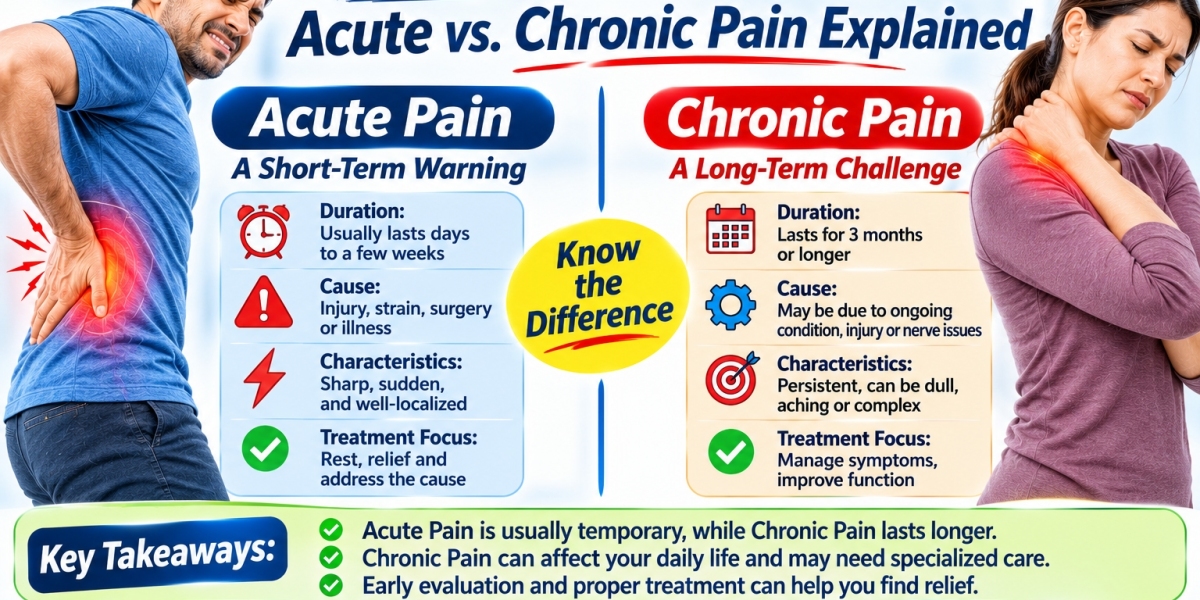

Pain is one of the body's most important warning signals. It alerts us when something is injured, irritated or not functioning properly. However, not all pain is the same. Some pain appears suddenly after an injury and gradually disappears, while other pain continues for months and affects everyday life.
Understanding the difference between acute and chronic pain is important because each may require a different approach to diagnosis and treatment. At Neurology and Pain Management Clinic (NPMC), Dr. Gautam Arora, Neurologist in Delhi, focuses on evaluating pain-related conditions and guiding patients towards appropriate care.
What Is Acute Pain?
Acute pain usually begins suddenly and is associated with an injury, illness, surgery or inflammation. It acts as a protective signal, encouraging the body to avoid further damage.
Common examples include:
- Pain after a muscle strain or sprain.
- Toothache or pain caused by an infection.
- Pain following surgery or an injury.
- Sudden back pain after lifting a heavy object.
- Pain caused by burns or cuts.
Acute pain generally improves as the underlying problem heals. Its duration can range from a few moments to several weeks, depending on the cause.
What Is Chronic Pain?
Chronic pain is generally defined as pain that persists or repeatedly occurs for longer than three months. It may continue even after the original injury has healed or without an obvious ongoing injury.
Common examples include:
- Chronic lower back and neck pain.
- Arthritis-related joint discomfort.
- Sciatica and nerve-related pain.
- Peripheral neuropathy.
- Persistent headaches or migraines.
- Complex Regional Pain Syndrome (CRPS).
Chronic pain can affect sleep, mood, mobility, concentration and overall quality of life. It may also involve changes in how the nervous system processes pain signals.
Key Differences Between Acute and Chronic Pain
| Acute Pain | Chronic Pain |
|---|---|
| Usually begins suddenly | May develop gradually or continue after an injury |
| Often linked to a specific cause | May have multiple or complex causes |
| Generally short-term | Persists or recurs for over three months |
| Often improves with healing | May require ongoing management |
| Acts as an immediate warning signal | Can affect physical and emotional well-being |
Why Does Chronic Pain Continue?
Chronic pain is not always a sign that tissue damage is still occurring. Sometimes, nerves become overly sensitive and continue sending pain signals. This may happen due to nerve damage, inflammation or changes in the way the brain and spinal cord process sensations.
Conditions such as neuropathy, spinal disorders and certain chronic pain syndromes may contribute to this process.
Treatment Options for Different Types of Pain
Treatment depends on the underlying cause, severity and individual health needs.
For acute pain, care may include appropriate rest, ice or heat when suitable, prescribed medication and treatment of the underlying injury or illness.
For chronic pain, management may involve:
- Medications for inflammation or nerve-related pain.
- Physiotherapy and guided exercises.
- Lifestyle and posture modifications.
- Nerve blocks or other selected pain management procedures.
- Psychological support and strategies for coping with persistent pain.
A personalised treatment plan can help improve comfort and daily functioning.
When Should You Consult a Specialist?
Do not ignore pain that persists, worsens or interferes with normal activities. Sudden severe pain, chest pain, new weakness, or numbness accompanied by bladder or bowel problems requires urgent medical assessment.
Get the Right Pain Management Guidance in Delhi
Understanding whether your pain is acute or chronic is an important step towards effective care. At Neurology and Pain Management Clinic (NPMC), Dr. Gautam Arora provides neurological evaluation and pain management guidance based on individual symptoms and medical needs.
If pain is affecting your daily routine, consult a neurologist in Delhi to identify its cause and explore suitable treatment options.









