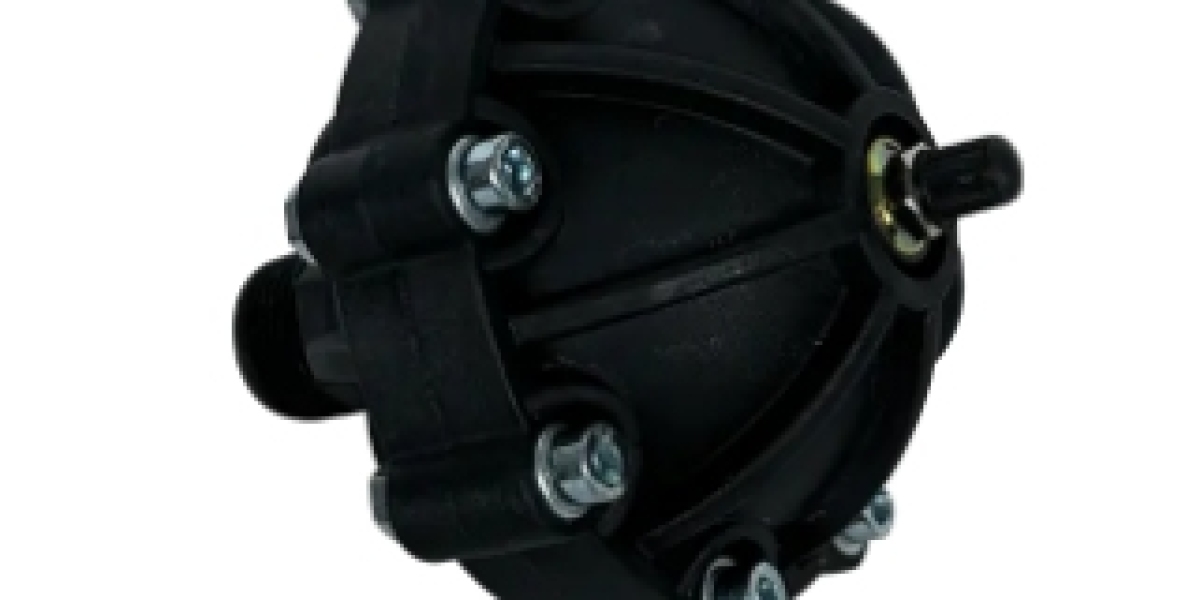

Agricultural spraying machinery requires dependable pumping components to deliver liquid formulations from storage tanks to distribution systems under controlled operating conditions. A diaphragm agricultural sprayer pump uses a flexible membrane and directional valves to generate suction and discharge, making it suitable for various agricultural fluid delivery applications. Its reciprocating structure provides a practical solution for machinery used in crop protection, liquid fertilizer application, and other farming operations. For agricultural equipment manufacturers, wholesalers, and international importers, understanding its construction and operating characteristics is important when selecting components for different sprayer configurations.
One of the main characteristics of diaphragm pumping technology is its positive-displacement operating principle. Rather than relying on a continuously rotating impeller to move liquid, the pump uses repeated changes in the volume of a pumping chamber. When the diaphragm moves away from the chamber, the internal space expands and draws liquid through an inlet valve. As the diaphragm moves in the opposite direction, the chamber contracts and forces the liquid through an outlet valve. This process repeats to provide the fluid movement required by the connected spraying equipment.
The pump generally consists of a housing, diaphragm assembly, inlet and outlet valves, drive mechanism, seals, and fluid connections. Each component contributes to the overall operation. The housing provides structural support, while the diaphragm separates the liquid chamber from the mechanical drive section. The valves regulate directional movement, helping prevent reverse flow during each pumping cycle. Depending on the equipment design, multiple pumping chambers may be used to support the required flow characteristics.
Material selection has a direct influence on equipment suitability. Agricultural sprayers may handle a variety of liquids, including diluted pesticides, herbicides, fungicides, and fertilizers. These substances can have different chemical properties and may affect elastomers, plastics, and metal components in different ways. The diaphragm, valve seats, gaskets, seals, and other wetted parts should therefore be evaluated for compatibility with the intended formulations. Buyers should also consider exposure temperature, chemical concentration, operating duration, and cleaning procedures when assessing component materials.
The range of agricultural spraying applications creates different pump requirements. Large field sprayers generally need a delivery system capable of supplying multiple nozzles across a wide spraying boom. Orchard equipment may require a different pressure arrangement to distribute liquid toward dense foliage and elevated branches. Vineyard sprayers, vegetable crop machines, and specialized agricultural equipment also have individual operating requirements. Pump selection should reflect these differences rather than relying on a single configuration for every application.
Flow capacity and operating pressure are fundamental technical considerations. Flow capacity determines how much liquid the pump can deliver over a specified period, while pressure influences the movement of liquid through pipes, regulators, and spray nozzles. Both values must match the intended machine configuration. A pump with insufficient delivery capacity may not support the required number of nozzles, while excessive capacity may create unnecessary demands on the pressure control system. Manufacturers should evaluate these characteristics together with the machine's working speed and application requirements.
Another important consideration is integration with the sprayer's drive system. Depending on the equipment design, the pump may operate through a suitable mechanical drive or another compatible power arrangement. Mounting dimensions, shaft configuration, operating speed, and connection sizes should be checked before installation. Proper alignment and secure mounting help reduce vibration and unnecessary mechanical stress. Suction and discharge hoses must also be suitable for their respective operating conditions to support reliable liquid movement.
Filtration plays an important role in protecting the pumping system. Foreign particles can interfere with valve movement, contribute to internal wear, or create blockages in downstream components. An appropriately selected inlet filter helps reduce contamination entering the pump, while additional filtration can be incorporated according to the nozzle specifications and system design. Filter capacity and mesh size should be matched to the spraying liquid and equipment requirements. Regular cleaning is necessary because accumulated particles may restrict flow and affect operating performance.
Maintenance practices are equally important for agricultural machinery operating throughout intensive spraying seasons. Operators should regularly examine the diaphragm, valves, seals, hose connections, and pressure regulation components. Leakage, unusual vibration, inconsistent pressure, or reduced liquid output may indicate a maintenance requirement. After using agricultural chemicals, the system should be flushed according to the chemical manufacturer's guidance and equipment instructions. This helps remove residual formulations and reduces the risk of contamination when changing spraying products.
For B2B buyers, purchasing decisions should consider the complete product specification rather than focusing exclusively on price. Importers and distributors should evaluate rated pressure, flow capacity, chemical compatibility, installation requirements, spare parts availability, and product consistency. Machinery manufacturers may also need to confirm whether a pump can be integrated into existing equipment designs without extensive modifications. Clear technical communication between suppliers and buyers helps reduce specification errors and supports more efficient procurement planning.
When evaluating a diaphragm agricultural sprayer pump, agricultural equipment buyers should also examine how filtration, pressure regulation, hoses, and nozzles work together as one fluid delivery system. The correct combination of components helps maintain suitable operating conditions and reduces avoidable maintenance issues. For additional agricultural pumping accessories and filtration solutions, including inlet and outlet water filters, visit https://www.agriculturaldiaphragmpump.com/product/inlet-and-outlet-water-filters/