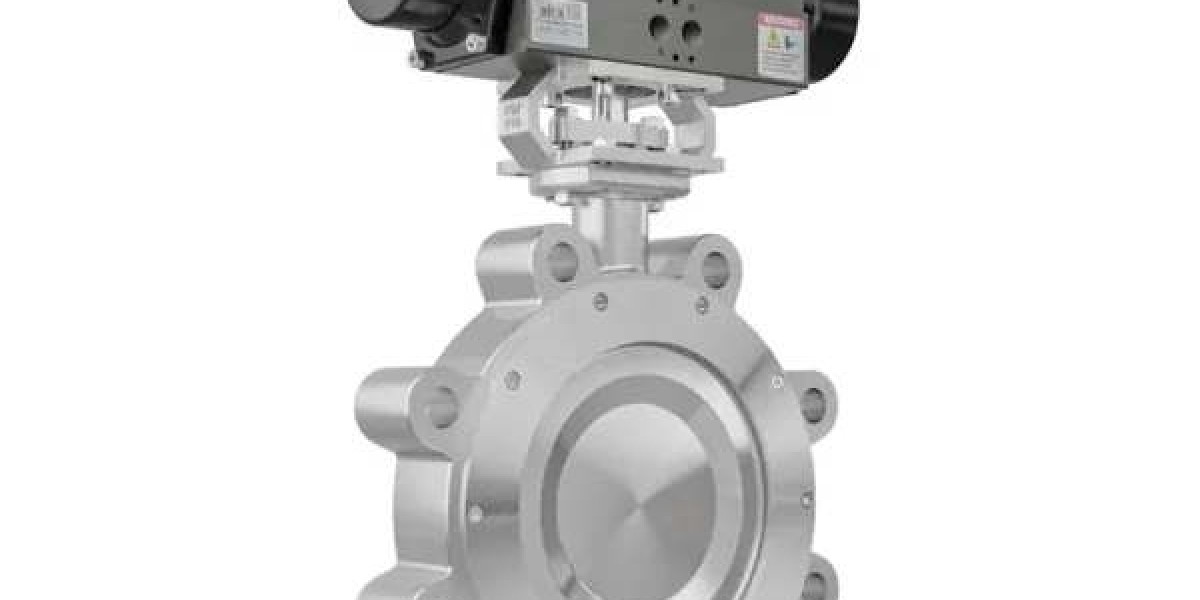

For industries evaluating a high performance butterfly valve, important considerations include pressure ratings, temperature limits, material compatibility, and sealing performance. These factors help determine whether a particular valve is suitable for demanding pipeline applications.
Understanding High Performance Butterfly Valves
A high-performance butterfly valve generally uses a double-offset design. Its disc and shaft arrangement reduces contact between the disc and seat during much of the opening and closing movement.
This design helps reduce seat friction and wear while supporting reliable sealing. Depending on the construction and materials, these valves can handle more demanding operating conditions than many standard concentric butterfly valves.
However, the actual pressure and temperature capabilities depend on the valve's design, size, materials, seat construction, and manufacturer specifications.
Why High Pressure Lines Require Suitable Valve Designs
High-pressure pipeline systems require valves that can withstand the operating pressure without compromising structural integrity or sealing performance.
Conventional butterfly valves may not be suitable for every demanding application. High-performance designs offer specific construction features that can support higher pressure requirements when correctly engineered and rated.
Selecting a valve with the appropriate pressure class helps reduce the possibility of leakage, premature component wear, and operational problems.
Improved Sealing Performance
Sealing performance is one of the major reasons industries select high-performance butterfly valves.
Their offset disc arrangement helps minimise unnecessary seat contact during operation. This can reduce friction and support longer seat service life under suitable conditions.
Depending on the seat material and valve configuration, these valves may provide effective shut-off for compatible liquids, gases, and other process media.
For high-pressure applications, buyers should always verify the specified leakage class and test requirements rather than assuming every butterfly valve provides the same sealing performance.
Efficient Operation and Automation
High-performance butterfly valves use a quarter-turn operating mechanism, allowing the valve to move between open and closed positions through approximately 90 degrees of rotation.
This arrangement makes them suitable for manual operation through levers or gearboxes and automated operation using pneumatic or electric actuators.
Automation can support remote operation, improve process coordination, and reduce the need for manual intervention. The actuator must be correctly sized according to differential pressure, operating torque, and required safety margins.
Applications Across Different Industries
High-performance butterfly valves are used in several industrial sectors where their pressure ratings and construction are suitable.
Oil and gas: Used in selected pipeline and process applications.
Chemical processing: Suitable for compatible chemicals when appropriate materials are selected.
Power generation: Applied in certain utility and process-fluid systems.
Water treatment: Used in suitable high-pressure water distribution and treatment lines.
Petrochemical plants: Selected for process services requiring reliable isolation.
Industrial manufacturing: Used in fluid-handling systems with demanding operating conditions.
The correct valve selection depends on the actual process fluid, pressure, temperature, and applicable industry standards.
Important Materials and Design Considerations
Material selection directly influences valve performance and service life. Common body materials include carbon steel, stainless steel, and ductile iron, depending on the design and application.
Seat materials may include PTFE-based materials, reinforced polymers, or other engineered materials suitable for the operating environment.
Before purchasing, engineers should evaluate pressure ratings, temperature limits, corrosion resistance, disc construction, shaft design, and connection type. These specifications help ensure compatibility with the pipeline system.
Choosing the Right Manufacturer and Supplier
Selecting a suitable valve manufacturer requires reviewing technical capabilities, product documentation, testing procedures, and application experience.
Buyers should request pressure-temperature ratings, dimensional drawings, material details, applicable certifications, and relevant test reports. It is also important to confirm that the valve meets the required industry standards and project specifications.
Aira Euro Automation Pvt Ltd is associated with the industrial valve and automation sector, where selecting suitable valve designs and compatible automation solutions is important for industrial applications.
Conclusion
Industries choose high-performance butterfly valves for demanding pipeline applications because of their offset design, reduced seat friction, effective sealing capabilities, and automation options.
However, reliable operation depends on selecting the correct pressure rating, materials, seat construction, and actuator arrangement. By carefully evaluating these technical requirements, industries can choose suitable valves that support safe, efficient, and dependable high-pressure pipeline operations.









