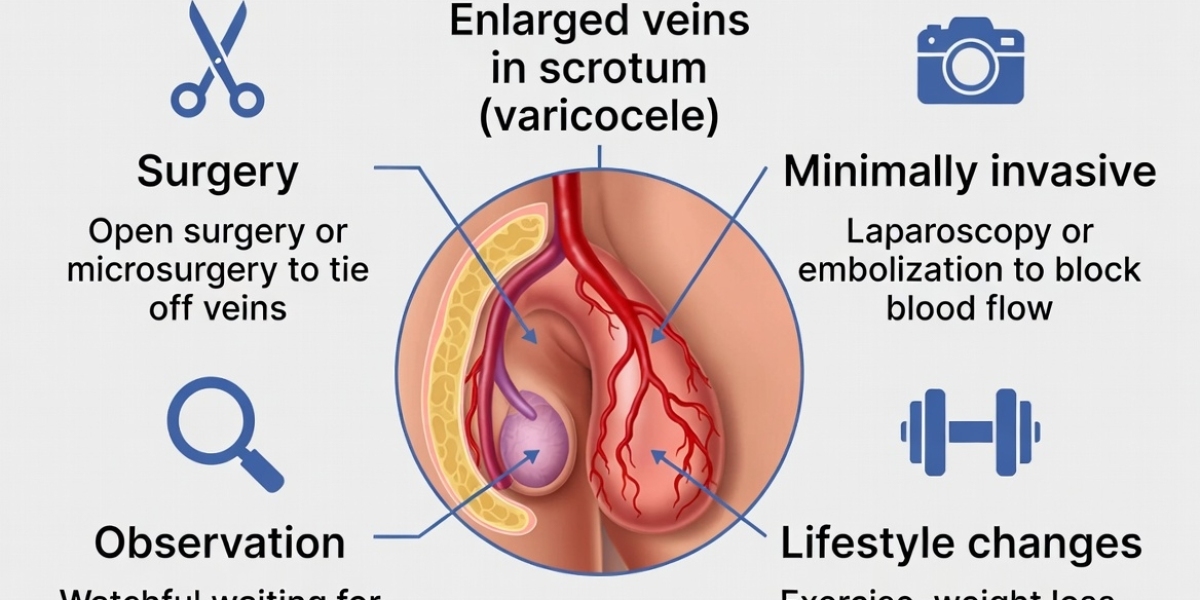

The good news is that varicocele is treatable. Depending on the severity of the condition, symptoms, and fertility goals, treatment may involve observation, lifestyle adjustments, pain management, varicocele surgery, or a minimally invasive procedure called varicocele embolization.
This comprehensive guide explains what varicocele is, its causes, symptoms, diagnosis, available treatment options, recovery, and when medical treatment may be necessary.
What Is Varicocele?
A varicocele is the enlargement of veins within the scrotum, the pouch of skin that holds the testicles. These veins are part of the pampiniform plexus, a network of blood vessels responsible for helping regulate testicular temperature and returning blood from the testicles toward the heart.
When the valves inside these veins do not function properly, blood can accumulate, causing the veins to become enlarged and swollen. This condition is known as varicocele.
Varicocele most commonly develops on the left side of the scrotum, although it can occur on the right side or both sides. It usually develops during puberty and may gradually become more noticeable over time.
Varicocele is found in a significant proportion of men and is one of the commonly identified conditions associated with male infertility. However, not every man with varicocele experiences fertility problems, pain, or testicular damage.
Common Causes of Varicocele
The exact cause of varicocele is not always clear, but it generally develops because of impaired blood flow through the veins responsible for draining blood from the testicles.
Several factors may contribute to the development of varicocele.
1. Dysfunction of venous valves
Veins contain valves that help prevent blood from flowing backward. When these valves become weak or malfunction, blood may flow backward and accumulate within the scrotal veins, causing them to enlarge.
2. Increased pressure in scrotal veins
An increase in pressure within the veins surrounding the testicles can contribute to vein enlargement. The anatomical arrangement of the veins, particularly on the left side, makes left-sided varicocele more common.
3. Anatomical differences
The left testicular vein drains into the left renal vein, while the right testicular vein typically drains directly into the inferior vena cava. These anatomical differences may contribute to the greater frequency of varicocele on the left side.
4. Puberty and growth
Varicocele often develops during puberty, when the testicles grow and blood flow to the reproductive organs increases. The condition may become more apparent during this period.
5. Venous blood-flow abnormalities
In some individuals, differences in vein structure, pressure, or circulation may contribute to the development of varicocele.
Varicocele is not generally caused by sexual activity, masturbation, or poor personal hygiene.
Symptoms of Varicocele
Many men with varicocele have no symptoms and discover the condition during a routine examination or fertility evaluation. However, symptomatic varicocele may cause discomfort and other noticeable changes.
Common symptoms include:
Dull scrotal pain: A dull, aching, or uncomfortable sensation in the testicles.
Scrotal heaviness: A feeling of heaviness or dragging in the scrotum, particularly after prolonged standing.
Visible enlarged veins: Enlarged veins may become visible or palpable above the testicle.
Pain after physical activity: Discomfort may increase after exercise, lifting heavy objects, or standing for long periods.
Testicular size difference: The affected testicle may become smaller than the other testicle in some cases.
Fertility problems: Some men with varicocele may experience reduced sperm count, sperm motility, or sperm quality.
Scrotal swelling: The affected area may feel enlarged because of the dilated veins.
When should you see a doctor?
You should seek medical evaluation if you experience persistent testicular pain, noticeable scrotal swelling, a change in testicular size, a palpable mass, or difficulty conceiving.
Sudden, severe testicular pain, especially with swelling, nausea, or vomiting, requires urgent medical attention because it may indicate testicular torsion or another emergency rather than varicocele.
Grades of Varicocele
Varicocele is commonly classified into three clinical grades according to the size of the enlarged veins and whether they can be detected during physical examination.
Grade | Description |
|---|---|
Grade 1 | Small varicocele that can be felt during examination when the patient performs the Valsalva maneuver, but is not usually visible. |
Grade 2 | Moderate varicocele that can be felt during examination without the Valsalva maneuver but may not be clearly visible. |
Grade 3 | Large varicocele that is visible through the scrotal skin and easily palpable during physical examination. |
The grade of varicocele alone does not determine whether treatment is required. Symptoms, testicular size, semen analysis, and fertility goals are also important.
How Is Varicocele Diagnosed?
Proper diagnosis is essential to determine the severity of varicocele and whether treatment is necessary. A urologist or male reproductive specialist may use several methods to evaluate the condition.
1. Physical examination
The doctor examines the scrotum while the patient is standing and sometimes lying down. The examination may include palpation of the testicles and enlarged veins.
The doctor may ask the patient to perform the Valsalva maneuver, which involves bearing down or holding the breath briefly while pushing, to make the veins more noticeable.
2. Scrotal ultrasound
A scrotal ultrasound is a non-invasive imaging test that uses sound waves to examine the testicles and surrounding veins.
It may help:
Confirm the presence of varicocele.
Assess the size of enlarged veins.
Detect abnormal blood flow.
Evaluate testicular size and structure.
Identify other causes of scrotal swelling or discomfort.
3. Doppler ultrasound
Doppler ultrasound is particularly useful for evaluating blood flow within the scrotal veins. It can detect reflux, which is the backward flow of blood through veins, and provide information about the severity of venous abnormalities.
4. Semen analysis
A semen analysis may be recommended for men who are concerned about fertility. This laboratory test evaluates several characteristics of semen, including:
Sperm concentration.
Sperm count.
Sperm motility.
Sperm morphology.
Semen volume.
The results help determine whether varicocele may be associated with impaired sperm quality.
5. Hormonal testing
In certain cases, the doctor may recommend hormonal blood tests, particularly when testicular dysfunction, infertility, or symptoms suggestive of hormonal abnormalities are present.
These tests may include testosterone, follicle-stimulating hormone (FSH), and luteinizing hormone (LH).
Varicocele Treatment Options
Varicocele treatment depends on the severity of the condition, the presence of symptoms, testicular health, and whether the patient is planning to have children.
Not every varicocele requires treatment. Many men with small or asymptomatic varicoceles can safely remain under observation. However, treatment may be recommended when the condition causes persistent pain, testicular growth problems, or fertility-related concerns.
1. Conservative Treatment and Observation
Conservative treatment may be appropriate for men with mild symptoms or varicocele that does not affect testicular function or fertility.
The doctor may recommend monitoring the condition rather than performing surgery.
Conservative management may include:
Wearing supportive underwear.
Avoiding prolonged standing when it aggravates discomfort.
Taking breaks during strenuous activities.
Applying a cold pack wrapped in a cloth for short periods.
Using pain-relieving medication when medically appropriate.
Regular medical follow-up.
These measures may help reduce discomfort, but they do not eliminate the enlarged veins or correct the underlying venous reflux.
2. Varicocele Surgery (Varicocelectomy)
Varicocelectomy is a surgical procedure used to treat varicocele by closing or ligating the enlarged veins responsible for abnormal blood flow.
The goal of surgery is to redirect blood flow through healthy veins, reduce venous pressure, and improve the conditions surrounding the testicles.
Varicocele surgery may be recommended for:
Persistent scrotal pain that does not improve with conservative management.
Infertility in men with clinically palpable varicocele and abnormal semen parameters, when appropriate.
Testicular growth impairment in adolescents.
Selected cases of testicular dysfunction.
Types of Varicocele Surgery
Microsurgical varicocelectomy
Microsurgical varicocelectomy is widely regarded as one of the preferred surgical approaches for treating varicocele, particularly when fertility outcomes and reducing complications are important considerations.
During the procedure:
The patient receives anesthesia.
The surgeon makes a small incision near the groin or below the inguinal canal.
The enlarged veins are identified using surgical magnification.
The abnormal veins are ligated or divided while preserving important structures, including the testicular artery and lymphatic vessels.
The incision is closed.
Microsurgical techniques allow the surgeon to carefully identify and preserve important structures, potentially reducing the risk of complications such as recurrence and hydrocele.
Laparoscopic varicocelectomy
Laparoscopic varicocelectomy is performed using small abdominal incisions through which a camera and surgical instruments are inserted.
The surgeon identifies and ligates the abnormal veins using a minimally invasive approach. Laparoscopic surgery may be appropriate in selected cases, including bilateral varicocele, depending on the surgeon's expertise and the patient's circumstances.
Open varicocelectomy
Open varicocelectomy involves surgically accessing the veins through an incision in the groin or lower abdominal region. Depending on the technique, it may be performed without microsurgical magnification.
The choice of surgical approach depends on the patient's condition, the surgeon's expertise, and the expected benefits and risks.
3. Varicocele Embolization
Varicocele embolization is a minimally invasive, image-guided procedure that treats varicocele without a conventional surgical incision in the groin.
It is performed by an interventional radiologist using a catheter, imaging guidance, and specialized materials to block the abnormal veins.
How Is Varicocele Embolization Performed?
A small access site is created in a vein, commonly in the neck or groin.
A thin catheter is inserted into the venous system.
The catheter is guided to the affected testicular vein using imaging.
The abnormal vein is blocked using coils, plugs, or other embolic materials.
Blood flow is redirected through healthy veins.
The catheter is removed and the access site is closed.
Benefits of Varicocele Embolization
Minimally invasive procedure.
No conventional surgical incision in the groin.
Often performed under local anesthesia with sedation.
Generally shorter recovery compared with some surgical approaches.
Usually performed as an outpatient procedure.
May be suitable for recurrent varicocele after surgery.
No direct surgical dissection around the testicular artery.
Embolization is not suitable for every patient. The choice between embolization and surgery depends on the anatomy, symptoms, treatment goals, and availability of experienced specialists.
Which Varicocele Treatment Is Best?
The best treatment for varicocele depends on the patient's symptoms, fertility goals, testicular condition, and the severity of the venous abnormality.
Treatment | Best suited for |
|---|---|
Observation | Mild varicocele without significant symptoms or testicular impairment |
Conservative management | Mild scrotal discomfort or heaviness |
Microsurgical varicocelectomy | Symptomatic varicocele or selected fertility-related cases |
Laparoscopic surgery | Selected patients requiring surgical treatment |
Varicocele embolization | Patients suitable for minimally invasive vein occlusion, including some recurrent cases |
Microsurgical varicocelectomy and varicocele embolization are two commonly considered treatment options for men who require intervention. The decision should be made after a thorough examination and discussion of the benefits, risks, and alternatives.
Risks and Complications of Varicocele Treatment
Varicocele treatment is generally safe when performed by experienced specialists, but every procedure carries potential risks.
Possible complications of varicocele surgery
Hydrocele: Fluid accumulation around the testicle, which may occur if lymphatic vessels are affected.
Varicocele recurrence: Enlarged veins may persist or return after treatment.
Infection: Infection may develop at the surgical incision.
Bleeding or hematoma: Blood may accumulate around the surgical area.
Testicular artery injury: Rarely, injury to the testicular artery may affect blood supply to the testicle.
Persistent pain: Pain may continue even after successful treatment.
Anesthesia-related complications: These may occur depending on the type of anesthesia used.
Possible complications of varicocele embolization
Discomfort at the catheter insertion site.
Bruising or bleeding.
Contrast-related reactions.
Radiation exposure during imaging.
Coil migration, which is uncommon.
Persistent or recurrent varicocele.
Rare vascular complications.
The doctor should explain the expected benefits and potential complications before the procedure.
Recovery After Varicocele Treatment
Recovery depends on the treatment method, the patient's overall health, and the nature of the procedure.
Recovery after varicocele surgery
Most patients can return home the same day or after a short hospital stay, depending on the procedure and medical circumstances.
Common recovery recommendations include:
Rest during the first 24 to 48 hours.
Avoid heavy lifting and strenuous exercise for a period recommended by the surgeon.
Wear supportive underwear if advised.
Keep the surgical incision clean and dry according to instructions.
Use prescribed pain medication when needed.
Avoid sexual activity until the surgeon advises that it is safe.
Attend follow-up appointments.
Many patients return to light activities within several days, while full recovery may take a few weeks.
Recovery after varicocele embolization
Recovery after embolization is often relatively quick.
Patients may generally:
Return home the same day.
Experience mild discomfort at the access site.
Resume light daily activities within a day or two.
Avoid heavy lifting and strenuous exercise temporarily.
Follow the interventional radiologist's instructions.
Recovery times vary, and the treating specialist should provide individualized instructions.
Does Varicocele Treatment Improve Fertility?
Varicocele is associated with impaired sperm production and semen quality in some men. Increased scrotal temperature, oxidative stress, and abnormal venous circulation may contribute to reproductive dysfunction.
In appropriately selected men, varicocele treatment may improve:
Sperm concentration.
Sperm motility.
Sperm morphology.
Testicular function.
Some fertility outcomes.
However, treatment does not guarantee pregnancy or restoration of normal fertility.
Men considering varicocele treatment for infertility should generally undergo a fertility evaluation, including semen analysis, and their partners should also be evaluated when appropriate.
Semen quality may take several months to improve because sperm production takes time. Improvement is commonly assessed over approximately three to six months following treatment, although results vary.
Does Varicocele Cause Erectile Dysfunction?
Varicocele is primarily a condition affecting the veins surrounding the testicles and is not generally considered a direct cause of erectile dysfunction (ED).
However, some men with varicocele may have concerns about testosterone levels, sexual performance, fertility, or discomfort during sexual activity.
In selected men, varicocele may be associated with altered testosterone production. Studies have suggested that testosterone levels may improve following varicocele repair in some patients, particularly those with low testosterone before treatment.
However, varicocele treatment is not a guaranteed treatment for erectile dysfunction.
Men experiencing erectile dysfunction should undergo an appropriate medical evaluation to identify potential causes, including hormonal, vascular, metabolic, psychological, and other factors.
Can Varicocele Be Prevented?
There is no proven method to prevent varicocele because it is generally associated with venous valve dysfunction and anatomical factors.
However, maintaining general health may help support reproductive and vascular health.
Some general recommendations include:
Maintain a healthy body weight.
Avoid smoking.
Exercise regularly.
Avoid excessive heat exposure to the testicles when possible.
Seek medical evaluation for persistent scrotal discomfort.
Avoid delaying evaluation of noticeable testicular changes.
These measures do not prevent or reverse varicocele but may contribute to overall health.
Varicocele Treatment at Dot Clinics in Lahore and Multan
Men experiencing scrotal pain, heaviness, enlarged veins, testicular size changes, or fertility-related concerns should seek professional medical evaluation.
At Dot Clinics in Lahore and Multan, Pakistan, patients can seek medical consultation for men's health concerns and discuss appropriate diagnostic and treatment options with qualified healthcare professionals.
A medical evaluation may help determine whether the condition requires observation, further investigation, or referral for a surgical or minimally invasive procedure.
The appropriate treatment depends on the patient's symptoms, examination findings, fertility goals, and overall health.
Frequently Asked Questions About Varicocele Treatment
1. Can varicocele be treated without surgery?
Mild varicocele without significant symptoms or testicular impairment may not require surgery. Conservative measures, such as supportive underwear and pain management, may help relieve discomfort. However, these measures do not eliminate the enlarged veins.
2. Is varicocele surgery painful?
Varicocele surgery is usually performed under anesthesia, so the patient does not experience pain during the operation. Mild pain, swelling, or discomfort may occur during recovery and is generally managed with prescribed medication.
3. How long does varicocele surgery take?
Varicocele surgery typically takes approximately 30 to 90 minutes, depending on the surgical technique, anatomy, and whether one or both sides are treated.
4. Is varicocele treatment permanent?
Varicocele treatment can provide long-term relief, but recurrence or persistence is possible. Microsurgical techniques and embolization may offer good outcomes in appropriately selected patients, but no procedure guarantees permanent resolution.
5. Can varicocele cause infertility?
Varicocele may affect sperm production, sperm quality, and fertility in some men. However, many men with varicocele have normal fertility. Treatment may improve semen parameters and fertility outcomes in appropriately selected patients.
6. Can varicocele cause testicular shrinkage?
Yes. Varicocele may be associated with reduced testicular growth or testicular atrophy in some men, particularly when the condition is significant or longstanding.
7. Is varicocele treatment safe?
Varicocele surgery and embolization are generally safe procedures when performed by appropriately trained specialists. However, complications such as recurrence, hydrocele, infection, bleeding, or persistent pain may occur.
8. Can varicocele come back after surgery?
Yes. Varicocele may recur or persist after treatment. The likelihood depends on the technique, anatomy, and other factors. Additional evaluation may be needed if symptoms return.
9. When can I resume exercise after varicocele surgery?
Light activities may be resumed within a few days, but heavy lifting, vigorous exercise, and strenuous physical activity are usually restricted for a period determined by the surgeon, often around two weeks or longer depending on the procedure.
10. When can I have sex after varicocele treatment?
Patients are commonly advised to avoid sexual activity for approximately one to two weeks after surgery, or until the surgeon confirms that recovery is progressing appropriately. Recommendations may differ after embolization.
11. Is varicocele embolization better than surgery?
Both treatments can be effective. Embolization is minimally invasive and may offer a shorter recovery, while microsurgical varicocelectomy is widely used and often favored for its favorable recurrence and complication profile in many settings. The best option depends on individual circumstances and specialist expertise.
12. Does every varicocele need treatment?
No. Many men with varicocele do not require treatment. Intervention is generally considered when the condition causes persistent pain, testicular growth impairment, or fertility-related problems in appropriately selected patients.
Conclusion
Varicocele is a common male reproductive health condition caused by enlarged veins within the scrotum. Although many men experience no symptoms, others may develop scrotal discomfort, heaviness, testicular size changes, or fertility-related problems.
Effective treatment options include conservative management, microsurgical varicocelectomy, laparoscopic surgery, and varicocele embolization. The choice of treatment depends on symptoms, testicular health, fertility goals, and medical evaluation.
Early diagnosis and appropriate treatment can help manage symptoms, protect testicular health, and improve fertility-related outcomes in selected patients.
Men experiencing persistent scrotal discomfort, enlarged veins, testicular changes, or difficulty conceiving should consult a qualified healthcare professional for an accurate diagnosis and individualized treatment plan.