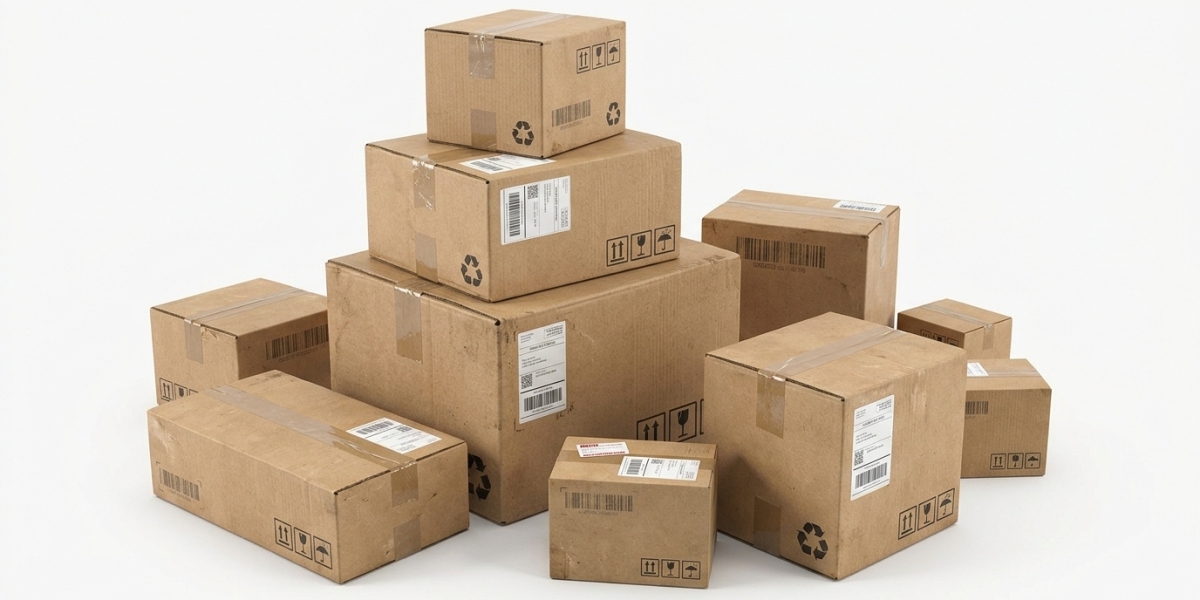

Cardboard Shipping Boxes: The Complete Guide to Choosing the Right Packaging
Cardboard shipping boxes are wholesale the unsung heroes of modern commerce. Whether you run a growing e-commerce brand, manage a retail warehouse, or ship products globally, the humble brown box is the primary barrier protecting your merchandise from drops, vibrations, moisture, and stacking pressure. Yet despite how common they are, choosing the wrong shipping box is one of the easiest ways to lose money—either through damaged goods in transit or inflated carrier fees caused by oversized packaging.
Understanding how cardboard shipping boxes are constructed, graded, and sized allows you to protect your inventory, lower shipping costs, and deliver a reliable unboxing experience to every customer.
Corrugated Cardboard vs. Paperboard: Know the Difference
In casual conversation, nearly every rigid paper container is called "cardboard." In the packaging and logistics industry, however, there is an important structural difference between paperboard and corrugated fiberboard:
Paperboard (Chipboard): Made from a single, thick layer of paper pulp, paperboard is used for cereal boxes, cosmetic cartons, and lightweight retail sleeves. While smooth and easy to print on, it lacks the structural strength required to survive parcel shipping on its own.
Corrugated Fiberboard: This is the true material behind cardboard shipping boxes. It is engineered from at least three layers of paper: a wavy, arched inner sheet called fluting glued between two flat outer sheets called linerboards. Those tiny arches act like built-in shock absorbers, dispersing impact forces and giving the box impressive vertical stacking strength while keeping it remarkably lightweight.
Main Types of Corrugated Shipping Boxes
Not every shipment requires heavy-duty industrial packaging, and not every product can survive in a basic parcel carton. Matching the wall construction to your product's weight and fragility is essential:
| Box Construction | Layer Structure | Ideal Applications |
| Single-Wall | 1 fluted layer between 2 linerboards | Everyday e-commerce orders, clothing, books, and non-fragile goods |
| Double-Wall | 2 fluted layers and 3 linerboards | Heavy items, fragile electronics, glassware, and stacked pallet freight |
| Triple-Wall | 3 fluted layers and 4 linerboards | Industrial equipment, bulk produce, automotive parts, and crate replacements |
| Mailer Boxes | Die-cut corrugated board with self-locking flaps | Subscription boxes, boutique retail, and branded direct-to-consumer kits |
Most standard shipping boxes follow the Regular Slotted Container (RSC) design, where all flaps are the same length and the two outer flaps meet at the center when folded. RSC boxes are economical to manufacture, ship flat to save warehouse space, and assemble in seconds.
How Flute Profiles Affect Performance
If you look closely at the cut edge of a corrugated box, you will see the wave pattern of the inner fluting. Manufacturers produce different flute profiles—designated by letters—to balance cushioning, crush resistance, and print quality:
A-Flute (approx. 5 mm thick): The original and thickest standard flute. It offers maximum cushioning and top-to-bottom compression resistance, making it ideal for fragile items.
B-Flute (approx. 3 mm thick): Thinner with more flutes per foot, B-flute resists punctures and crushing while providing a flatter surface for high-quality printing. It is widely used for canned goods and retail displays.
C-Flute (approx. 4 mm thick): The workhorse of the shipping industry. Roughly 80% of standard shipping cartons use C-flute because it delivers a balanced combination of cushioning, stacking strength, and affordability.
E-Flute (approx. 1.5 mm thick): Very thin and dense, E-flute is commonly used for custom mailers, cosmetic boxes, and small consumer packaging that requires sharp graphic printing.
BC-Flute (approx. 7 mm thick): A popular double-wall combination pairing B-flute and C-flute to handle heavy loads and long-haul transit.
Decoding Box Strength Ratings: ECT vs. Mullen Test
Flip any commercial shipping box upside down and you will see a round or rectangular stamp known as the Box Manufacturer’s Certificate (BMC). This stamp certifies the strength of the board using one of two industry tests:Custom bluebird packaging
Edge Crush Test (ECT): Measures how much vertical force (in pounds per linear inch) a sample of corrugated board can withstand before buckling. ECT directly reflects how well boxes hold up when stacked on pallets inside trucks or warehouses. A 32 ECT box is the standard benchmark for shipping up to 65 pounds, while 44 ECT and 48 ECT ratings handle heavier or densely packed loads.
Mullen Burst Test: Measures the force (in pounds per square inch) needed to puncture or rupture the box wall from the inside or outside. A 200# (200-pound) burst rating is the traditional equivalent of 32 ECT and is especially useful when shipping heavy, loose, or sharp-edged items that press outward against the walls during rough handling.
Smart Strategies for Sizing, Packing, and Sustainability
Even the strongest cardboard shipping box can fail if it is sized or sealed improperly. Keep these four practical rules in mind when optimizing your packaging workflow:
Minimize Empty Space to Beat DIM Weight: Major parcel carriers price shipments using Dimensional (DIM) Weight, calculating cost based on box volume rather than actual scale weight alone. Choosing a box that fits your product snugly prevents you from paying to ship empty air and reduces the amount of void-fill material required.
Leave a Buffer for Fragile Items: When shipping breakables, select a box that leaves roughly two inches of clearance on all sides of the item. Fill that buffer zone with kraft paper, bubble wrap, or air pillows so the product cannot shift against the outer walls.
Seal with the H-Tape Method: Never rely on a single strip of tape across the center seam. Apply strong pressure-sensitive packing tape—or water-activated reinforced paper tape—along the center seam and across both edge seams on the top and bottom of the box, forming an "H" shape that keeps flaps locked under stress.
Keep Packaging Easy to Recycle: Standard uncoated kraft corrugated boxes are among the most widely recycled materials globally, often containing high percentages of post-consumer recycled fiber. Avoiding heavy plastic laminates and wax coatings ensures your customers can flatten the box and place it straight into curbside recycling.
By paying closer attention to wall thickness, flute profiles, and accurate sizing, businesses can turn cardboard shipping boxes from a routine overhead expense into a reliable safeguard for both profit margins and customer satisfaction.









