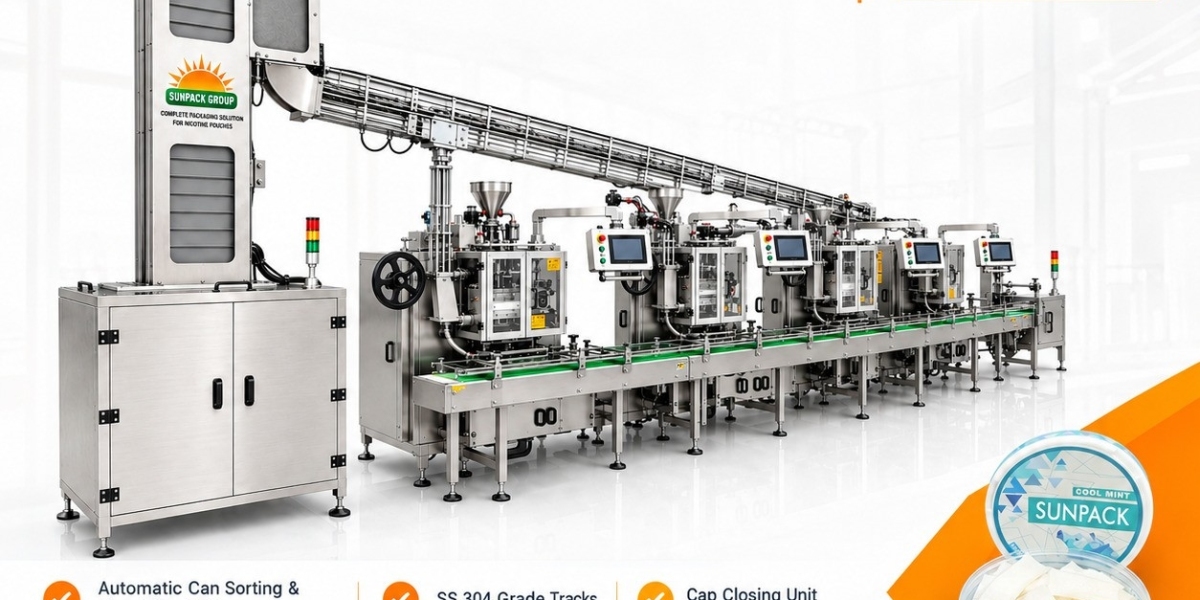

Manufacturers that handle multiple products or pack sizes often face a common challenge: changing production requirements without losing too much time or compromising packaging quality. A changeover may involve adjusting filling settings, replacing packaging film, modifying sealing parameters, or cleaning product-contact components. When evaluating equipment from Automatic Packing Machine Manufacturers, businesses should consider how efficiently the machine can move from one production setup to another while maintaining accuracy, consistency, and safe operating conditions.
Understand What Each Changeover Involves
Not every product change requires the same level of adjustment. Switching between two pack sizes of the same product may involve relatively simple setting changes. Moving from one product to another, however, could require cleaning, changing product-contact components, adjusting the feeding system, and checking the dosing arrangement.
Before planning a changeover, identify all the tasks involved. These may include:
Stopping the machine and securing it safely.
Removing remaining product and packaging material.
Cleaning relevant machine components.
Changing product-contact parts, where required.
Adjusting filling and sealing parameters.
Loading the new packaging material.
Producing and inspecting trial packs before restarting normal production.
A documented sequence helps operators understand what needs to be completed and reduces the possibility of missing an important step.
Prepare Materials and Components in Advance
One of the simplest ways to reduce changeover time is to prepare everything before production stops. Waiting for packaging film, tools, replacement parts, or cleaning supplies can extend downtime unnecessarily.
Production teams should confirm the next product's requirements in advance. The correct packaging material, product-contact components, measuring tools, and cleaning equipment should be available near the machine without obstructing access or creating safety risks.
Where multiple pack sizes are handled, clearly identifying change parts can also prevent confusion. Components should be labelled or stored according to their intended application so that operators do not waste time searching for the correct items.
Standardise Machine Settings for Repeat Production
Different products and pack sizes may require different operating parameters. These can include filling quantity, machine speed, sealing temperature, sealing time, and other application-specific settings.
Keeping a record of approved settings can make repeat changeovers more predictable. Operators can refer to the relevant production information rather than relying entirely on memory or making adjustments through trial and error.
However, saved settings should not be treated as a substitute for verification. Product flow, packaging material, and operating conditions may change between production runs. Trial packs should always be checked before full production resumes.
Pay Attention to Cleaning and Product Residues
Cleaning is an important part of product changeovers, particularly when the next product has different characteristics or when hygiene requirements demand thorough removal of residues.
The cleaning procedure should identify which components need attention, how they should be accessed, and whether any parts need to be removed. Product-contact areas such as hoppers, dosing components, feeding channels, and discharge sections may require particular care.
A Fully Automatic Packing Machine can coordinate several packaging functions, but automation does not remove the need for proper cleaning and inspection. Operators must understand which activities require manual intervention and how to carry them out safely.
Cleaning procedures should also follow the machine manufacturer's instructions and the relevant requirements of the product being handled.
Make Adjustments Without Compromising Packaging Quality
Once the new product and packaging material are ready, the machine needs to be adjusted for the next production run. Rushing this stage can lead to inaccurate filling, poor sealing, misaligned film, or inconsistent pack appearance.
Start with the recommended settings and produce a small number of trial packs. Check their weight, dimensions, seal quality, and overall appearance. If the results are outside the required limits, make controlled adjustments and repeat the checks.
A Semi Automatic Packing Machine may involve additional manual steps during product loading or pack handling. In these cases, operator consistency becomes particularly important. Clear work instructions and practical training can help maintain uniform results between shifts.
Use Operator Training and Clear Responsibilities
Changeovers often involve several people, including machine operators, production supervisors, and maintenance staff. If responsibilities are unclear, tasks may be repeated or overlooked.
A simple changeover checklist can define who is responsible for cleaning, component replacement, machine adjustment, trial production, and final approval. Operators should also know when a problem requires maintenance support rather than further adjustment.
Training should cover the actual machine configuration and products handled at the facility. Practical demonstrations are often more useful than relying only on written instructions, especially when operators need to identify parts or make precise adjustments.
Measure Changeover Performance
Businesses should record how long changeovers take and identify where delays occur. It is useful to separate the total downtime into individual activities, such as cleaning, material replacement, adjustment, and trial production.
This makes it easier to find the real causes of delays. For example, repeated waiting for components may indicate a preparation problem, while frequent trial adjustments may suggest that product settings or operating instructions need improvement.
The aim should not be to reduce changeover time at any cost. Safety checks, cleaning requirements, and quality verification must remain part of the process.
Select Equipment with Future Changeovers in Mind
When assessing packaging equipment, consider the number of products and pack formats the business expects to handle. Ask about adjustment procedures, change-part availability, cleaning access, and the time required to move between common production setups.
When comparing the 1 kg Automatic Packing Machine Price in India, evaluate changeover features alongside capacity, filling accuracy, material compatibility, and after-sales support. A suitable Semi Automatic Packing Machine should also be assessed according to the level of manual adjustment involved. Ultimately, efficient changeovers depend on practical machine design, prepared materials, trained operators, and consistent procedures—all working together to keep production organised and packaging quality under control.