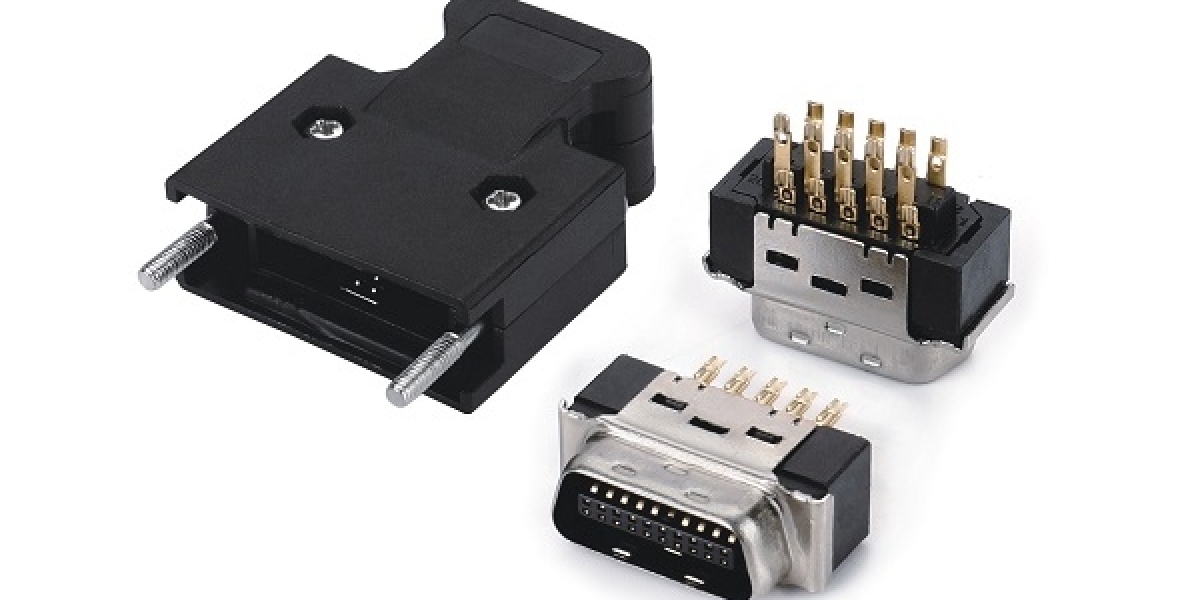

D-sub connectors, also known as D-subminiature connectors, have been an essential part of electronic and communication equipment for decades. Recognizable by their D-shaped metal shield, these connectors provide reliable signal transmission and secure mechanical connections. Although many modern interfaces have emerged, D-sub connectors continue to play an important role in various industries due to their durability and versatility.Get more news about D-sub Connector,you can vist our website!
What Are D-sub Connectors?
A D-sub connector is an electrical connector characterized by a D-shaped metal shell that surrounds a group of pins or sockets. The unique shape helps ensure correct alignment and prevents incorrect connections.
D-sub connectors are available in different pin configurations, such as 9-pin, 15-pin, 25-pin, and 37-pin versions. Historically, they were widely used for computer serial ports, parallel ports, and VGA video connections. Today, they remain common in industrial equipment, telecommunications devices, medical systems, and embedded electronics.
Their simple design and proven reliability make them a practical solution for applications requiring stable electrical connections.
Why Are D-sub Connectors Still Used Today?
Despite the popularity of USB, HDMI, and other modern interfaces, D-sub connectors continue to be valued in many professional environments.
One reason is their robust mechanical construction. The metal shell provides protection against physical damage and electromagnetic interference. In addition, screw-lock mechanisms help maintain a secure connection, even in environments with vibration or movement.
Another advantage is compatibility. Many industrial and legacy systems still rely on D-sub interfaces, making them essential for equipment upgrades and maintenance. Replacing entire systems can be costly, so organizations often continue to use D-sub connectors where reliability and compatibility are priorities.
How to Choose the Right D-sub Connector
Selecting the right D-sub connector depends on several factors. First, determine the required number of contacts based on the signals that need to be transmitted. Different applications may require different pin counts and layouts.
Environmental conditions should also be considered. For harsh industrial settings, connectors with enhanced shielding or rugged housings may provide better performance and durability.
Additionally, users should evaluate installation requirements, including cable type, mounting method, and available space. Choosing a connector that matches both electrical and mechanical requirements can improve system reliability and reduce maintenance costs.
Conclusion
D-sub connectors remain a trusted connectivity solution across many industries. Their durable construction, secure mating design, and long-standing compatibility make them valuable even in today's rapidly evolving technology landscape. By understanding their features, applications, and selection criteria, users can choose the most suitable D-sub connector for their specific needs.