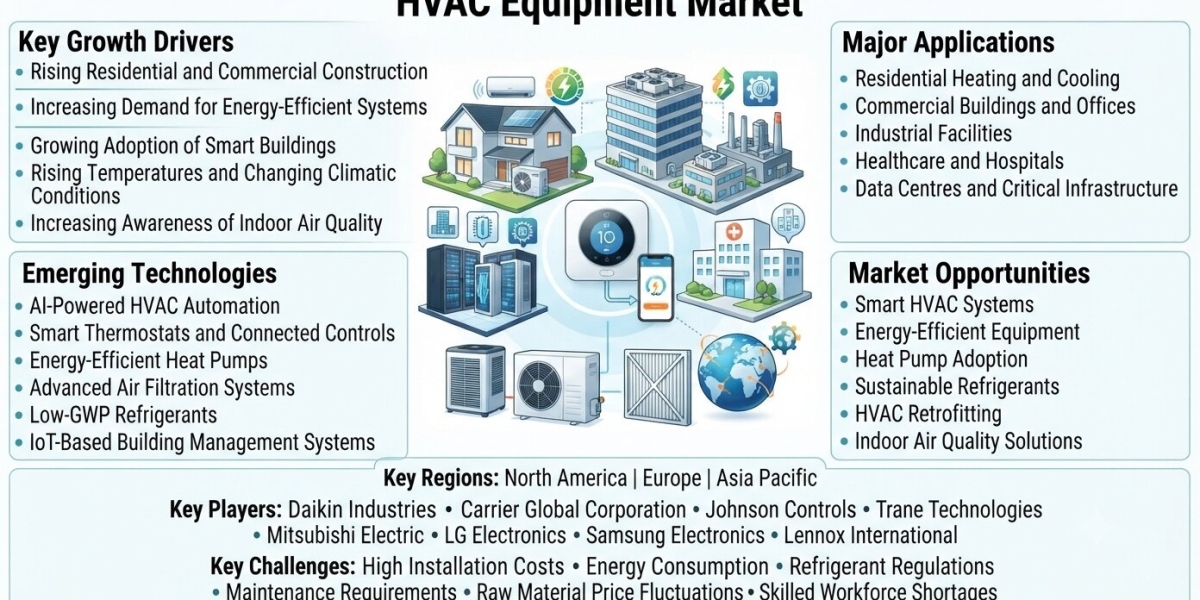

According to Transpire Insight, the HVAC Equipment Market size is estimated at USD 277.8 Billion in 2026 and is anticipated to reach USD 445.73 Billion by 2033, growing at a CAGR of 6.99 % from 2026 to 2033. The growth will be fueled by increasing construction activities, rising demand for energy-efficient heating and cooling systems, changing climatic conditions, and growing adoption of smart buildings.
The market is expected to benefit from increasing interest in sustainable infrastructure, indoor air quality, and intelligent climate control solutions. Improvements in heat pump technology, smart HVAC automation, energy-efficient equipment, and environmentally friendly refrigerants are also creating new opportunities for manufacturers.
Why the HVAC Equipment Market Is Influencing the Building and Construction Industry
The growing adoption of HVAC equipment is transforming how residential and commercial buildings are designed and operated. Increasing temperatures, changing weather patterns, and rising expectations for indoor comfort are encouraging property owners and businesses to invest in reliable heating and cooling systems. HVAC equipment is also essential in environments such as healthcare facilities, data centres, laboratories, and industrial plants, where temperature and ventilation control can directly influence operations.
Additionally, growing emphasis on sustainable construction is encouraging the adoption of energy-efficient HVAC technologies. Building developers and facility managers are increasingly considering equipment that reduces electricity consumption, improves indoor air quality, and supports environmental objectives. This combination of comfort requirements, infrastructure development, and energy efficiency is contributing to the market's expansion.
Read more: https://www.transpireinsight.com/report/hvac-equipment-market
Key Factors Supporting HVAC Equipment Market Growth
Rising Construction and Infrastructure Development
Expanding residential construction, commercial real estate projects, industrial facilities, and infrastructure development are increasing the need for HVAC installations. Growing urban populations and the development of smart buildings are creating demand for modern heating, cooling, and ventilation solutions. Retrofitting older buildings with updated HVAC equipment also provides additional opportunities for manufacturers and service providers.
Increasing Demand for Energy-Efficient Systems
Rising electricity costs and growing awareness of environmental sustainability are encouraging consumers and businesses to select energy-efficient HVAC equipment. Advanced air conditioners, heat pumps, efficient chillers, and variable-speed systems can help reduce energy consumption while maintaining indoor comfort. Government energy-efficiency initiatives and building regulations are further supporting this transition.
Changing Climatic Conditions and Indoor Air Quality Awareness
Increasing temperature variations and extreme weather conditions are strengthening the need for dependable heating and cooling systems. At the same time, greater awareness of indoor air quality is encouraging investment in ventilation equipment, air filtration systems, and air purification technologies. These requirements are expanding HVAC applications across residential, commercial, and healthcare environments.
Key Players in the HVAC Equipment Market
Daikin Industries
Carrier Global Corporation
Johnson Controls
Trane Technologies
Mitsubishi Electric
LG Electronics
Samsung Electronics
Honeywell International
Lennox International
Panasonic Corporation
Segmentation of the HVAC Equipment Market
Product Type
Heating Equipment
Cooling Equipment
Ventilation Equipment
System Type
Central HVAC Systems
Split Systems
Ductless Systems
Packaged HVAC Systems
Application
Residential
Commercial
Industrial
Technology
Conventional HVAC Systems
Smart HVAC Systems
Energy-Efficient HVAC Systems
How Technological and Industry Developments Are Changing Demand
Smart HVAC Systems and Automation
The integration of smart technologies is changing how HVAC equipment is monitored and controlled. Connected thermostats, automated temperature controls, and building management systems allow users to adjust indoor conditions and monitor energy consumption more effectively. These solutions can improve operational efficiency and provide greater control over heating, cooling, and ventilation.
Advancements in Heat Pumps and Refrigeration Technologies
Manufacturers are increasingly developing advanced heat pumps, improved compressors, and modern refrigeration technologies to enhance system efficiency. These developments support lower energy consumption and help address changing environmental requirements. Improvements in equipment design and performance are also creating opportunities for HVAC adoption in different building types.
Regional Patterns and Emerging Demand in the HVAC Equipment Market
North America represents an established market supported by widespread HVAC adoption, replacement demand, and increasing interest in energy-efficient systems. Europe is witnessing opportunities through building energy-efficiency initiatives, sustainable construction, and the adoption of advanced heating technologies.
Asia-Pacific offers significant growth potential due to rapid urbanization, expanding construction activities, rising disposable incomes, and increasing demand for air conditioning. Countries such as China, India, Japan, and South Korea are contributing to regional demand. Meanwhile, the Middle East and Latin America also present opportunities as commercial infrastructure, residential development, and industrial facilities continue to expand.
Challenges Companies Need to Consider in the HVAC Equipment Industry
Despite positive growth prospects, the HVAC equipment market faces challenges such as high initial installation costs, maintenance requirements, and fluctuations in raw material prices. Energy-efficient and technologically advanced systems may require significant upfront investment, which can affect adoption among price-sensitive customers.
Additionally, changing environmental regulations concerning refrigerants, energy consumption, and emissions require manufacturers to continuously improve their products. Supply chain disruptions, competition, and the availability of skilled installation and maintenance professionals can also influence industry performance.
Future Opportunities in the HVAC Equipment Market
The HVAC equipment market is expected to benefit from increasing investment in smart buildings, sustainable infrastructure, and energy-efficient technologies. The growing adoption of heat pumps, intelligent ventilation systems, and connected HVAC equipment offers new opportunities for manufacturers.
Furthermore, demand for HVAC upgrades and replacement systems in existing buildings can support long-term industry development. Innovations in low-impact refrigerants, automation, air filtration, and energy management are also expected to influence future product development. Companies investing in research, efficient manufacturing, and advanced system integration will be better positioned to address changing customer requirements.
What This Means for the HVAC Equipment Industry
The expansion of the HVAC equipment market highlights the growing importance of indoor comfort, energy efficiency, and sustainable building infrastructure. Increasing construction activity, changing climatic conditions, and technological advancements are creating opportunities across residential, commercial, and industrial applications. Companies that focus on product innovation, energy-efficient solutions, and smart HVAC technologies will be well-positioned to respond to evolving market demand. Going forward, monitoring environmental regulations, construction trends, and technological developments will remain important for stakeholders seeking to maintain competitiveness in the HVAC equipment industry.
Latest Reports:
https://in.pinterest.com/pin/1083819466608251121/
https://in.pinterest.com/pin/1083819466608208476/
https://in.pinterest.com/pin/1083819466608124660/
https://in.pinterest.com/pin/1083819466608093791/
https://www.quora.com/What-is-the-difference-between-Nutanix-and-VMware/answer/Devashish-217
https://www.quora.com/What-are-the-benefits-brought-by-the-railways/answer/Devashish-217