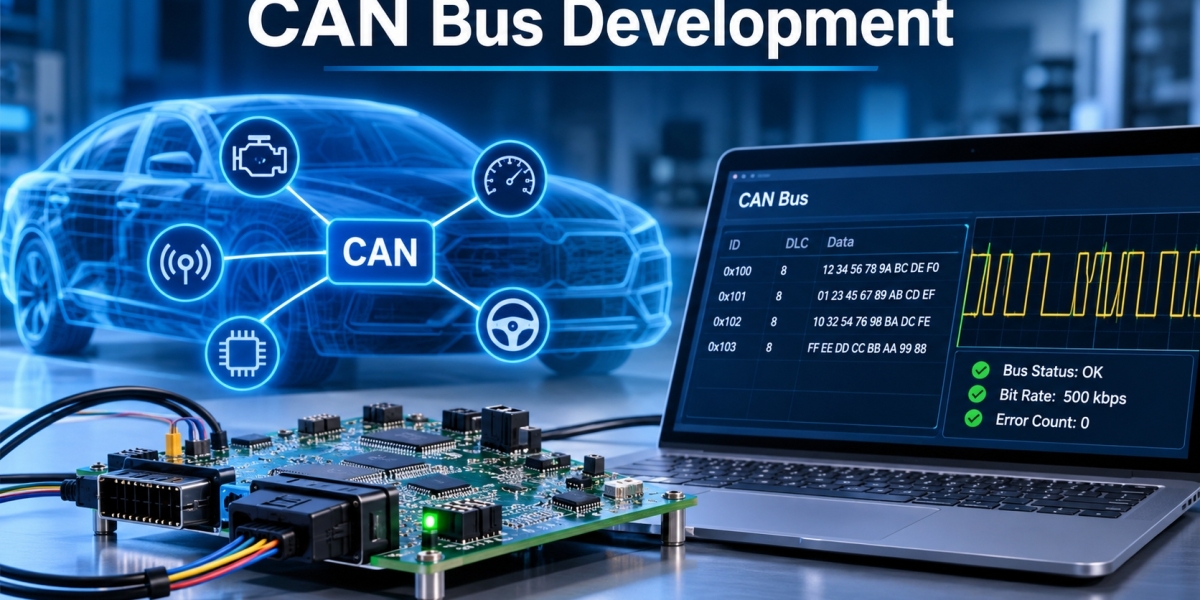

Modern vehicles use advanced electronic systems to manage engine performance, braking, transmission, safety features, and other important functions. These systems need to communicate with each other continuously to ensure smooth and reliable operation. The Controller Area Network (CAN) bus makes this communication possible by allowing different electronic control units (ECUs) to exchange information through a shared communication network. CAN Bus Diagnostics plays an important role in identifying communication issues and maintaining the performance of these systems.
What Is a CAN Bus System?
A CAN bus is a communication protocol designed to connect multiple electronic control units within a vehicle or machine. Instead of requiring separate wiring for every connection, the CAN network allows different controllers to share information through a common communication channel.
For example, an engine control unit can communicate with the transmission system, while other controllers manage braking, steering, and dashboard information. This communication helps different components work together efficiently.
Why Is CAN Bus Diagnostics Important?
When a communication problem occurs, it can affect several connected systems. A faulty sensor, damaged wiring, incorrect configuration, or communication interruption may create unexpected system behaviour.
Common CAN Bus Problems
Some common issues found in CAN networks include:
Wiring faults: Damaged cables or loose connections can interrupt communication.
Termination problems: Incorrect termination resistance may affect signal quality.
Communication errors: Controllers may experience difficulty exchanging messages.
Faulty ECUs: A malfunctioning control unit can disturb network communication.
Signal interference: Electrical noise can affect reliable data transmission.
Identifying the actual source of a problem is important because replacing components without proper testing may increase maintenance costs.
Tools and Techniques Used for Diagnostics
Engineers use different tools to inspect CAN communication and identify faults. Diagnostic scanners help retrieve error codes, while CAN analyzers allow engineers to monitor network messages and communication activity.
Oscilloscopes can also be used to examine CAN High and CAN Low signals. By studying signal patterns, engineers can identify electrical abnormalities and communication-related issues.
A systematic diagnostic process usually includes checking the wiring, inspecting connectors, measuring termination resistance, monitoring communication messages, and analysing error information.
Benefits for Automotive and Industrial Applications
CAN communication is used in passenger vehicles, commercial vehicles, agricultural machinery, construction equipment, and industrial automation systems. Reliable diagnostics helps maintain communication between important electronic components.
It can also support preventive maintenance, reduce unexpected downtime, improve troubleshooting accuracy, and help engineers maintain system reliability.
Conclusion
Modern electronic systems depend on accurate and continuous communication. Understanding CAN networks and applying proper diagnostic methods helps engineers identify faults before they become major problems. Effective CAN network testing supports better performance, improved reliability, and efficient maintenance across automotive and industrial applications.
Frequently Asked Questions
1. What is CAN Bus Diagnostics?
CAN Bus Diagnostics is the process of examining a Controller Area Network to identify communication errors, electrical faults, and controller-related problems. It helps engineers understand why connected electronic systems may not be communicating correctly. Diagnostic tools are used to inspect messages, error codes, and signal activity.
2. What are the common signs of a CAN bus problem?
Common signs include warning lights, communication error codes, malfunctioning electronic components, and unexpected behaviour from connected systems. In some cases, multiple control units may stop communicating with each other. Proper testing helps identify whether the issue is related to wiring, hardware, or network communication.
3. Which tools are used to test a CAN bus network?
Engineers commonly use diagnostic scanners, CAN bus analyzers, oscilloscopes, and digital multimeters. Each tool provides different information about the network. Combining these tools can help identify electrical problems, incorrect signals, and communication failures.
4. Can CAN bus problems affect vehicle performance?
Yes, CAN communication problems can affect systems that depend on shared electronic information. Depending on the fault, engine management, transmission, braking assistance, or dashboard functions may be affected. Timely diagnosis helps engineers locate the issue and restore reliable communication.