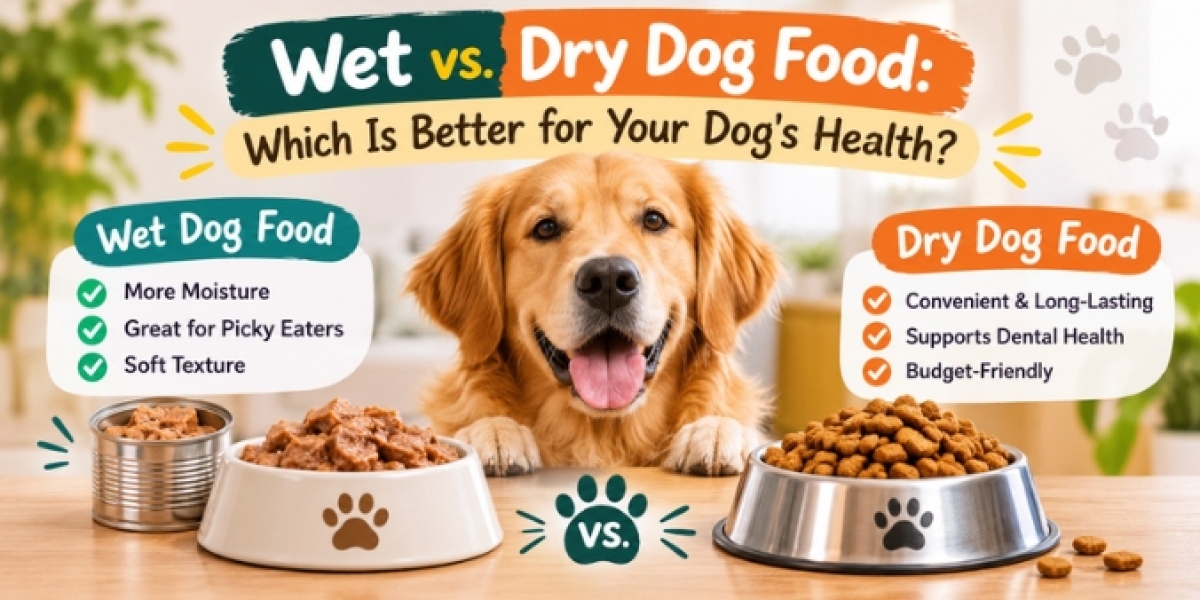

Choosing the right dog food sounds simple until you walk into a pet store or start browsing online. There are countless options, from crunchy kibble to soft canned meals and freshly prepared recipes. Every option promises something different, but one question keeps coming up: Is wet or dry dog food better for your dog's health?
I used to think the answer depended mainly on which food my dog enjoyed eating. However, understanding the nutritional differences made me realise that choosing healthy dog food involves much more than taste. Both wet and dry food have benefits, and the right choice depends on your dog's individual needs.
1. Understanding Wet and Dry Dog Food
Dry dog food, commonly known as kibble, is popular because it is convenient, affordable, and easy to store. It contains relatively little moisture and is available in different formulas for puppies, adults, seniors, and dogs with specific dietary needs.
Wet dog food, including canned dog food, contains considerably more moisture. Its softer texture and stronger aroma can make mealtimes more appealing, especially for picky eaters or dogs that struggle with harder textures.
Fresh-cooked dog food is another option worth understanding. Unlike conventional canned food, it is prepared using fresh ingredients and requires appropriate refrigeration or freezing.
2. Benefits of Dry Dog Food
One reason many pet parents prefer dry dog food is convenience. It can be stored easily, measured into portions, and used with automatic feeders.
Other potential advantages include:
Easy storage: Unopened bags generally have a longer shelf life.
Portion control: Measuring kibble makes daily calorie management straightforward.
Budget-friendly: Dry food often costs less per serving than many wet alternatives.
Dental convenience: Crunchy kibble can help reduce some plaque mechanically, although it does not replace proper dental care.
However, dry food contains less moisture, so dogs need consistent access to fresh drinking water. Not every kibble formula is nutritionally equal, either. Always check the ingredients and nutritional adequacy statement.
3. Why Wet Dog Food Can Be Beneficial
One noticeable difference between wet and dry food is moisture content. Wet dog food generally contains around 70–80% water, while dry kibble usually contains approximately 10%.
This additional moisture can contribute to daily hydration, particularly for dogs that do not drink much water.
Wet food also offers several advantages:
Softer texture for dogs with dental discomfort or difficulty chewing.
Stronger aroma that may encourage picky eaters.
Higher moisture content that supports overall water intake.
Different textures and flavours that can make meals more appealing.
The main disadvantages are higher storage requirements after opening, shorter refrigerator shelf life, and potentially higher feeding costs.
4. Is Mixing Wet and Dry Dog Food a Good Idea?
Absolutely, provided both foods are nutritionally suitable for your dog.
Mixed feeding can combine the convenience of dry kibble with the moisture and texture of wet food. For example, adding an appropriate amount of wet food to kibble may make meals more appealing to a dog that regularly leaves food in its bowl.
However, remember that additional food means additional calories. Adjust portions rather than simply adding wet food on top of the usual serving.
5. What About Fresh Dog Food?
Something I find particularly interesting about modern pet nutrition is the growing interest in freshly prepared meals. These offer another alternative to traditional kibble and canned food.
Fresh dog food typically contains more moisture and recognisable ingredients, such as meat, vegetables, and beneficial oils. However, fresh does not automatically mean complete and balanced. Check that the recipe meets established nutritional standards for your dog's life stage.
Pet parents exploring fresh dog food options can compare different recipes and ingredient combinations before deciding what suits their dog's nutritional requirements.
6. How Do You Choose the Best Food for Your Dog?
Before selecting between wet and dry food, consider these important factors:
Age: Puppies, adult dogs, and senior dogs have different nutritional requirements.
Activity level: More active dogs may need different calorie portions.
Health conditions: Allergies, digestive problems, and kidney disease may require veterinary guidance.
Weight: Choose portions according to your dog's calorie requirements and body condition.
Nutritional quality: Look for complete and balanced food rather than relying on attractive packaging claims.
If you decide to change your dog's diet, introduce the new food gradually. A sudden switch can cause digestive discomfort. This guide to switching your dog from dry kibble to fresh food explains why a gradual transition matters.
7. So, Which Is Better: Wet or Dry Dog Food?
There is no universal winner. Good-quality dry dog food can provide complete nutrition, while suitable wet food offers additional moisture and a softer texture. Some dogs also do well with a combination of both.
Ultimately, the best dog food is one that meets your pet's nutritional requirements, supports a healthy body condition, and fits your everyday routine.
Brands such as PawPots also offer freshly cooked, nutritionally balanced meals for pet parents interested in exploring alternatives to conventional kibble. Whichever option you choose, prioritise nutritional completeness, appropriate portions, and your dog's individual needs over marketing promises.
Because a healthier feeding routine starts with understanding what's actually inside your dog's bowl.