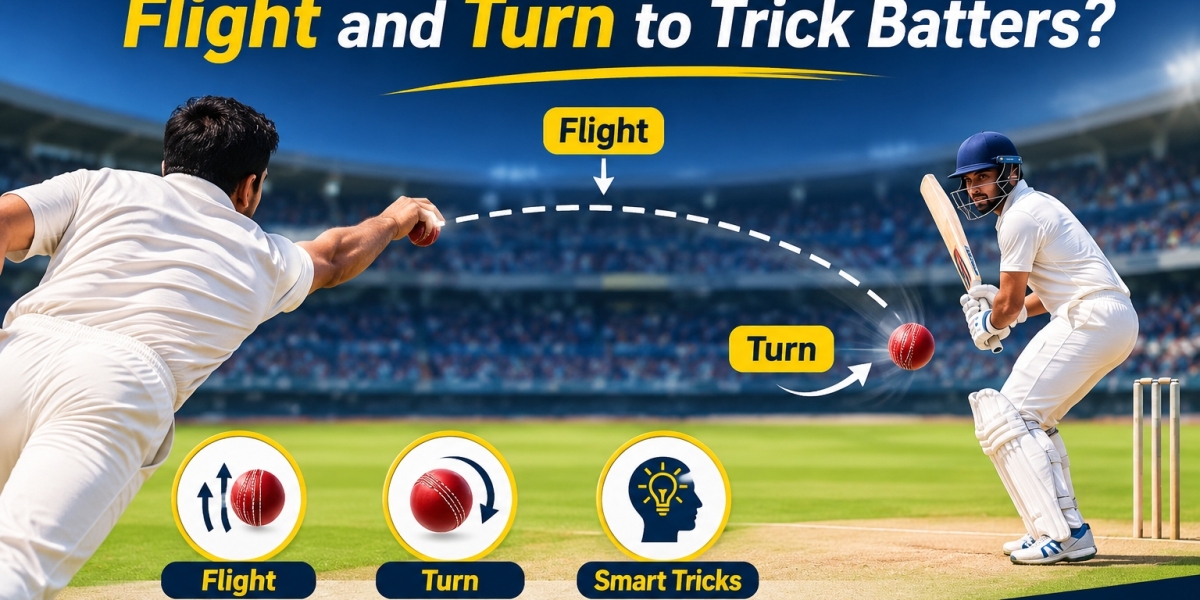

In cricket, fast bowlers often try to trouble batters with speed. However, spinners use a different method. They depend on flight, turn, speed changes, and smart bowling plans to make batters uncomfortable.
A spinner may bowl the ball slowly, but that does not mean it is easy to hit. In fact, a small change in the ball's direction or speed can make a big difference. The batter may expect the ball to turn one way, but it could behave differently after landing.
So, how do spinners create this confusion? Let's understand the main tricks they use and how these skills help them take wickets.
1. What Does Flight Mean in Spin Bowling?
Flight is the way a spinner sends the ball through the air before it reaches the batter. Instead of bowling every delivery at the same height and speed, spinners change the ball's path.
For example, a bowler may give the ball more height. This can make the batter think it is easy to hit. However, the ball may drop quickly and land closer to the batter than expected.
This creates doubt in the batter's mind. Should they move forward, stay back, or play a big shot?
That short moment of confusion can give the bowler an advantage.
2. How Does Turn Make Batters Miss the Ball?
Turn is one of the most important skills for spinners. It happens when the ball changes direction after hitting the pitch.
A right-arm off-spinner and a leg-spinner usually turn the ball in different directions. Therefore, batters need to understand the bowler's style before choosing their shots.
Here are some common types of spin bowling:
Off-spin: The ball usually turns from the off side towards the leg side for a right-handed batter.
Leg-spin: The ball usually turns from the leg side towards the off side for a right-handed batter.
Left-arm orthodox spin: A left-arm spinner usually turns the ball from the off side towards the leg side for a right-handed batter.
Left-arm wrist spin: This style usually turns the ball in the opposite direction to left-arm orthodox spin.
As a result, batters must watch the bowler's hand and the ball carefully.
3. Four Tricks Spinners Use to Confuse Batters
Good spinners do not depend on turn alone. Instead, they mix different skills to make it harder for batters to predict the next delivery.
1. Changing the Speed
A spinner may bowl one delivery slowly and the next one faster. This change can affect the batter's timing. If the batter expects a slow ball, a quicker delivery may force a rushed shot.
2. Using Different Flight Paths
Sometimes, the bowler sends the ball high into the air. At other times, they keep it flatter. Because of this, the batter has less time to decide how to play each delivery.
3. Creating Drift
Drift happens when a spinning ball moves sideways in the air before reaching the pitch. It can make the batter misjudge where the ball will land.
4. Using Dip
Dip is when the ball drops more sharply than the batter expects. Consequently, a batter who moves forward too early may fail to reach the ball properly.
4. Flight vs Turn: What Is the Difference?
Although both skills work together, flight and turn are not the same.
Feature | Flight | Turn |
Meaning | Movement of the ball through the air | Change in direction after pitching |
When it happens | Before the ball reaches the pitch | After the ball hits the pitch |
Main purpose | To affect the batter's judgment | To make the batter misread the direction |
Main effect | Changes the expected landing point | Changes the ball's path towards the batter |
Therefore, a spinner who controls both skills can create more problems for the batter.
5. Why Do Spinners Change Their Bowling Style?
Imagine a batter who has played five similar deliveries without any trouble. The bowler now knows that the batter is comfortable with that speed and length.
So, the spinner changes the plan.
For example, they may bowl a quicker delivery after several slow ones. Alternatively, they may send a flighted ball outside the batter's reach to encourage a risky shot.
Here are a few reasons why spinners change their approach:
To break the batter's rhythm: Different speeds make it harder to settle into one timing.
To create mistakes: A change in line or length can force the batter into an uncomfortable position.
To build pressure: Repeatedly bowling accurate deliveries can make batters take unnecessary risks.
To use the pitch: Some pitches offer more grip and turn than others. Spinners try to make the most of these conditions.
However, these tricks need good control. A poor delivery can give the batter an easy scoring chance.
6. How Do Pitch Conditions Help Spinners?
The pitch also plays an important role in spin bowling. On some surfaces, the ball grips the ground and turns more. On others, it may slide towards the batter without much movement.
Dry and rough pitches can sometimes help spinners get extra turn. Meanwhile, a flat pitch may offer less assistance.
In addition, the condition of the ball, weather, and match situation can affect how a spinner bowls.
For fans following cricket updates on KheloExch, understanding these details can make it easier to follow why spinners perform differently from one match to another.
7. Can a Spinner Take Wickets Without Getting Much Turn?
Yes. A spinner does not always need a lot of turn to take wickets.
For instance, a well-directed delivery may force a batter to defend. A quicker ball may beat the batter's timing. Similarly, a flighted delivery can encourage a batter to play an attacking shot and make a mistake.
Sometimes, the bowler sets up a wicket over several deliveries. They may bowl a few similar balls before using a different delivery to surprise the batter.
This is why spin bowling is not only about turning the ball. It is also about patience, planning, and reading the batter.
Frequently Asked Questions (FAQs)
1. What is flight in spin bowling?
Flight is the path a ball follows through the air before reaching the pitch. Spinners change its height and speed to confuse batters.
2. Why do spinners bowl slowly?
Spinners often use slower deliveries to give the ball more time in the air and make batters judge their shots carefully. However, they also use faster deliveries to change the batter's timing.
3. What is drift in cricket?
Drift is the sideways movement of a spinning ball while it is travelling through the air. It can make the batter misjudge the ball's landing point.
4. Which spinner turns the ball more, off-spinner or leg-spinner?
Neither type always turns the ball more. The amount of turn depends on the bowler's skill, grip, release, pitch, and other conditions.
5. Can spinners bowl without turning the ball?
Yes. They can use quicker deliveries, changes in flight, and variations in speed to trouble batters even when the ball does not turn much.
Final Thoughts
Spin bowling is a game of skill and smart thinking. Spinners use flight, turn, drift, dip, and speed changes to make batters unsure about their next move.
Most importantly, they do not need to bowl every delivery differently. Sometimes, repeating a good delivery and changing it at the right moment is enough to create a wicket. That is what makes spin bowling such an interesting part of cricket.