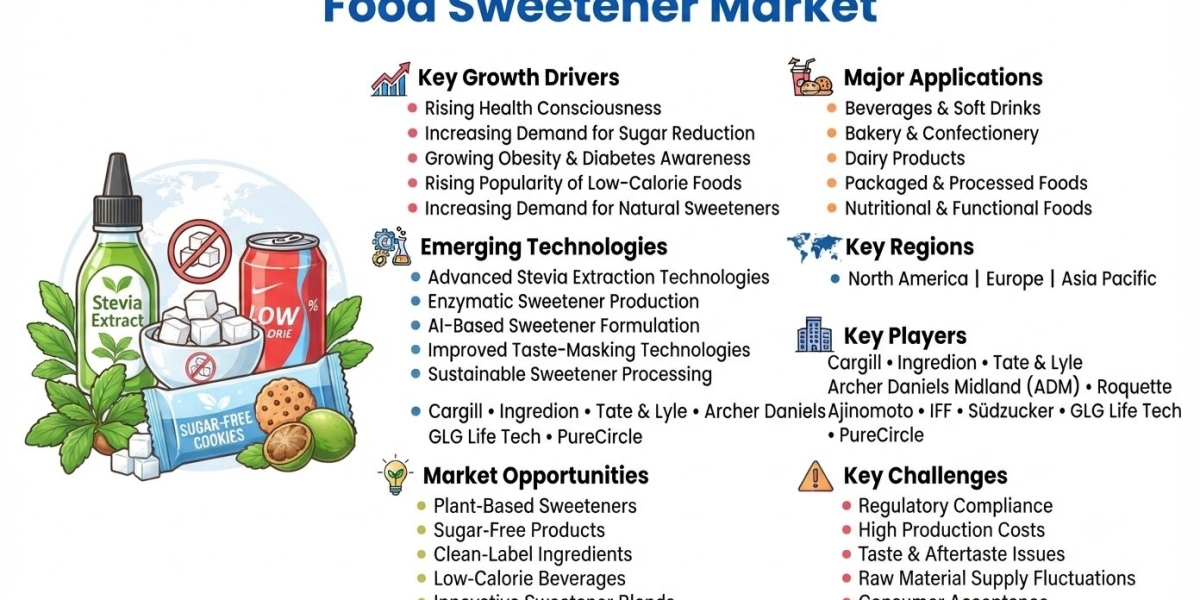

According to Transpire Insight, the Food Sweetener Market size is estimated at USD 82.6 Billion in 2026 and is anticipated to reach USD 106.1 Billion by 2033, growing at a CAGR of 3.64% from 2026 to 2033. The growth will be fueled by increasing health consciousness, rising demand for sugar-reduced products, growing awareness of obesity and diabetes, and the popularity of low-calorie food alternatives.
The market is expected to benefit from increasing interest in natural and plant-based sweeteners, clean-label ingredients, and sugar-free food and beverage products. Improvements in sweetener extraction, taste-masking technologies, and innovative ingredient formulations are also creating new opportunities for manufacturers.
Why the Food Sweetener Market Is Influencing the Food and Beverage Industry
The growing demand for reduced-sugar and sugar-free products is significantly influencing the food and beverage industry. Consumers are increasingly looking for healthier food options without compromising on taste, encouraging manufacturers to incorporate alternative sweeteners into their products. Natural sweeteners such as stevia, monk fruit, and other plant-derived ingredients are attracting interest, while artificial sweeteners continue to serve applications requiring sweetness, stability, and cost efficiency.
Additionally, the expansion of functional foods, low-calorie beverages, and specialized dietary products is supporting market demand. Food manufacturers are investing in new formulations that balance sweetness, flavor, texture, and nutritional requirements, making sweeteners an important ingredient category across the industry.
Read more: https://www.transpireinsight.com/report/food-sweetener-market
Key Factors Supporting Food Sweetener Market Growth
Rising Health Awareness and Demand for Sugar Reduction
Increasing awareness of the health concerns associated with excessive sugar consumption is encouraging consumers to choose low-sugar and sugar-free alternatives. Growing interest in weight management and healthier dietary habits is supporting the adoption of food sweeteners. Manufacturers are responding by reformulating beverages, snacks, dairy products, and packaged foods with alternative sweetening ingredients.
Growing Demand for Natural and Plant-Based Sweeteners
Consumer preference for recognizable and plant-derived ingredients is creating opportunities for natural sweeteners. Stevia, monk fruit, and other natural alternatives are gaining attention among manufacturers developing clean-label and reduced-calorie products. This trend is encouraging investment in ingredient innovation and the development of sweeteners that provide improved taste profiles.
Expansion of Packaged Food and Beverage Applications
The growing consumption of packaged foods, ready-to-drink beverages, confectionery, and convenience products is increasing the need for versatile sweetening ingredients. Food sweeteners help manufacturers achieve consistent taste and product quality across different applications, supporting their use in both established and emerging food categories.
Key Players in the Food Sweetener Market
Cargill
Ingredion
Tate & Lyle
Archer Daniels Midland (ADM)
Roquette Frères
Ajinomoto
International Flavors & Fragrances (IFF)
Südzucker
GLG Life Tech
PureCircle
Segmentation of the Food Sweetener Market
Type
Natural Sweeteners
Artificial Sweeteners
Product
Stevia
Sucralose
Aspartame
Saccharin
Acesulfame Potassium
Monk Fruit
Sugar Alcohols
Form
Powder
Liquid
Granules
Application
Beverages
Bakery and Confectionery
Dairy Products
Packaged Foods
Sauces and Dressings
Nutritional Products
End User
Food Manufacturers
Beverage Manufacturers
Foodservice Providers
Household Consumers
How Technological and Industry Developments Are Changing Demand
Advancements in Sweetener Extraction and Processing
Improvements in extraction, purification, and processing technologies are helping manufacturers develop sweeteners with better purity, consistency, and functionality. These advancements support the production of natural sweetening ingredients and help improve their suitability for different food and beverage applications.
Innovation in Taste and Product Formulation
Developments in ingredient blending and formulation techniques are helping manufacturers address challenges such as aftertaste, sweetness intensity, and product stability. Combining different sweeteners can help achieve more balanced flavor profiles while reducing overall sugar content. These innovations are expanding opportunities across beverages, bakery products, and specialized nutritional foods.
Regional Patterns and Emerging Demand in the Food Sweetener Market
North America represents an important market due to growing demand for low-calorie products, established packaged food manufacturers, and increasing interest in sugar reduction. Europe also presents opportunities through clean-label preferences and demand for healthier food formulations.
Meanwhile, Asia-Pacific is emerging as a significant growth region, supported by urbanization, expanding food processing industries, rising disposable incomes, and changing dietary habits. Increasing consumption of packaged foods and beverages is creating additional opportunities for sweetener manufacturers across developing economies.
Challenges Companies Need to Consider in the Food Sweetener Industry
Despite favorable growth opportunities, the industry faces challenges related to regulatory requirements, consumer perceptions, and product formulation. Some artificial sweeteners face scrutiny regarding consumer acceptance, while natural alternatives can involve higher production costs and supply limitations.
Additionally, achieving a taste profile comparable to traditional sugar remains a challenge in certain applications. Manufacturers must also address labeling requirements, ingredient approvals, and changing food safety standards across different markets.
Future Opportunities in the Food Sweetener Market
The market offers opportunities through the development of natural, plant-based, and low-calorie sweetening solutions. Growing demand for functional beverages, sugar-free confectionery, and healthier packaged foods is expected to encourage further product innovation.
Manufacturers can also explore advanced sweetener blends, improved taste technologies, and sustainable sourcing practices. Collaborations between ingredient suppliers, food producers, and research institutions may help accelerate the development of innovative sweetening solutions.
What This Means for the Food Sweetener Industry
The expansion of the Food Sweetener Market highlights the growing importance of alternative sweetening ingredients in the evolving food and beverage industry. As consumers increasingly prioritize sugar reduction, healthier diets, and natural ingredients, manufacturers have opportunities to develop products that meet changing preferences. Companies investing in ingredient innovation, taste improvement, regulatory compliance, and sustainable sourcing will be better positioned to address market demand. Going forward, monitoring consumer trends, food regulations, and technological developments will remain essential for stakeholders aiming to stay competitive in the food sweetener industry.
Latest Reports:
https://in.pinterest.com/pin/1083819466608251121/
https://in.pinterest.com/pin/1083819466608208476/
https://in.pinterest.com/pin/1083819466608124660/
https://in.pinterest.com/pin/1083819466608093791/
https://www.quora.com/What-is-the-difference-between-Nutanix-and-VMware/answer/Devashish-217
https://www.quora.com/What-are-the-benefits-brought-by-the-railways/answer/Devashish-217