
Skin laxity is one of the most common concerns people experience as their skin gradually loses firmness, elasticity, and structural support. It can develop because of natural ageing, changes in collagen production, weight fluctuations, pregnancy, sun exposure, and other lifestyle factors. Although loose skin is often associated with older age, younger individuals may also notice changes in skin firmness, particularly after significant weight loss or changes in body composition.
Modern aesthetic treatments offer different approaches to improving skin firmness and supporting a smoother appearance. However, selecting an appropriate procedure requires more than identifying the presence of loose skin. The degree of laxity, affected area, skin quality, and individual aesthetic goals all influence which treatment may be suitable.
For individuals considering Skin Tightening in Dubai, understanding how skin laxity affects treatment selection can make the decision-making process more informed. Dr. Camellia Kamyab focuses on evaluating individual skin concerns and identifying treatment approaches that correspond with each patient's needs. From mild early signs of looseness to more noticeable changes in skin firmness, a personalised assessment helps determine the most appropriate treatment strategy.
What Is Skin Laxity and Why Does It Develop?
Skin laxity refers to the gradual loss of skin firmness and elasticity. Healthy skin contains collagen and elastin, two essential proteins that help maintain its structure, flexibility, and ability to return to its original position after stretching.
Collagen provides structural support, while elastin allows the skin to stretch and recover. As people age, the natural production of these proteins decreases. Existing collagen fibres may also become less organised, contributing to thinner, less resilient skin.
Several factors can influence the development of skin laxity:
- Ageing: Natural changes in collagen and elastin production gradually reduce skin firmness.
- Weight fluctuations: Repeated weight gain and loss can stretch the skin and affect its ability to return to its previous shape.
- Pregnancy: Changes in body size can stretch the abdominal skin, sometimes resulting in persistent looseness.
- Sun exposure: Ultraviolet radiation contributes to collagen breakdown and premature skin ageing.
- Genetics: Inherited differences influence skin thickness, elasticity, and how quickly visible laxity develops.
- Lifestyle factors: Smoking, inadequate nutrition, and prolonged environmental exposure can contribute to changes in skin quality.
Understanding the underlying causes is important because not every type of skin laxity responds to the same treatment approach.
How Does the Degree of Skin Laxity Influence Treatment Selection?
The severity of skin laxity is one of the most important considerations when selecting an aesthetic treatment. Mild, moderate, and significant looseness can require different approaches depending on the condition of the skin and the patient's expectations.
Mild Skin Laxity
Mild laxity usually involves early changes in firmness rather than substantial loose or hanging skin. Patients may notice fine lines, slightly reduced elasticity, or subtle changes around the jawline, cheeks, neck, or abdomen.
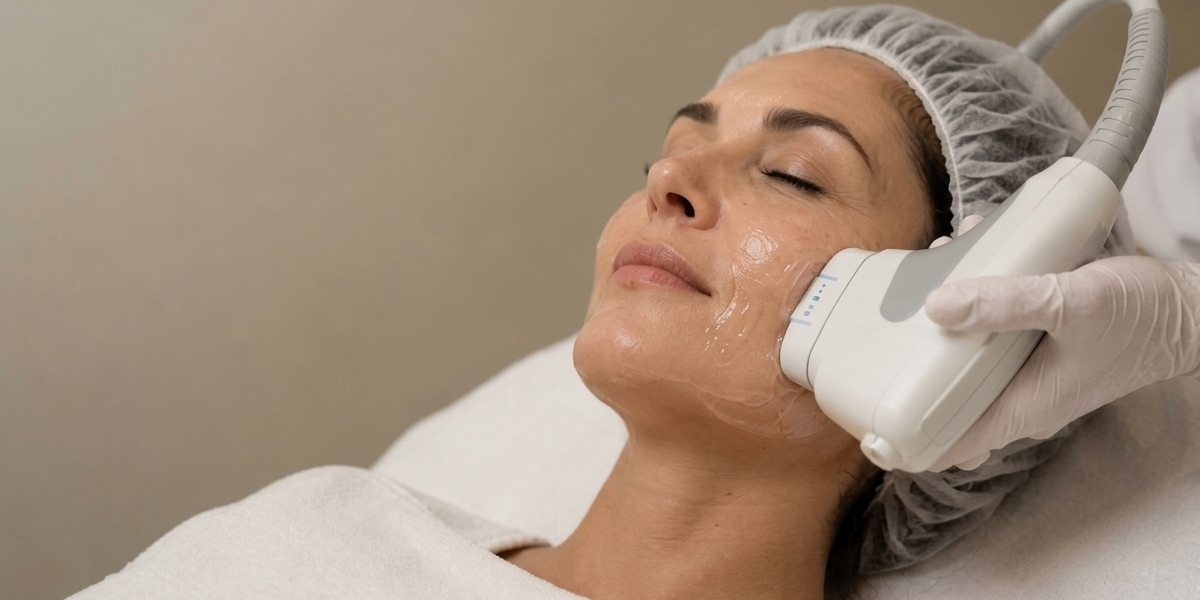
At this stage, non-surgical treatments may be considered. Radiofrequency-based procedures use controlled energy to heat targeted tissue, encouraging collagen remodelling. Ultrasound-based treatments deliver focused energy at selected depths to stimulate a tissue response.
These approaches may gradually improve skin firmness and texture. They are generally considered when patients have relatively good skin quality and want subtle improvements without undergoing surgery.
Moderate Skin Laxity
Moderate laxity involves more noticeable looseness, reduced elasticity, and changes in the skin's overall contour. It may appear around the lower face, neck, upper arms, abdomen, or thighs.
Treatment selection at this stage requires a closer assessment of skin thickness, elasticity, and the amount of excess tissue. Energy-based treatments may still be appropriate for selected individuals, although expectations need to reflect the degree of existing laxity.
Depending on the treatment area, a practitioner may discuss combining different approaches to address skin quality and firmness. The objective is to select a treatment plan that provides a meaningful improvement while respecting the limitations of non-surgical procedures.
Significant Skin Laxity
Significant laxity often involves considerable excess skin, pronounced folds, or hanging tissue. It can develop after substantial weight loss, pregnancy, or advanced age-related changes.
In these circumstances, non-surgical procedures may not provide the degree of correction a patient expects. Surgical options, which physically remove excess skin and reshape the affected area, may be more appropriate for selected candidates.
A professional consultation helps establish whether energy-based treatments, surgical procedures, or another approach is likely to address the concern effectively.
Which Skin Tightening Treatments Are Considered for Different Levels of Laxity?
Different technologies work through different mechanisms, which is why treatment selection should reflect the patient's skin condition rather than relying on a single popular procedure.
Radiofrequency Skin Tightening
Radiofrequency technology delivers controlled heat into targeted skin layers. This thermal stimulation can encourage collagen remodelling and support gradual improvements in skin firmness.
It is commonly considered for individuals with mild to moderate laxity who want to improve the appearance of loose skin without surgery.
Treatment suitability depends on the device, energy settings, treatment area, and the patient's skin characteristics. Some individuals may require multiple sessions to achieve their desired improvement.
Ultrasound-Based Skin Tightening
Ultrasound-based treatments use focused acoustic energy to target specific tissue depths. Depending on the technology, energy can be delivered to deeper supportive layers while leaving the skin surface relatively unaffected.
This approach may be considered for selected patients experiencing early to moderate changes in firmness, particularly around the face, jawline, and neck.
The depth of treatment and expected outcome depend on the individual's anatomy and the technology being used. Ultrasound procedures are not a substitute for surgical removal of substantial excess skin.
Combination Treatment Approaches
Some patients have more than one concern affecting their skin appearance. For example, someone may experience reduced firmness alongside uneven texture or changes in skin quality.
In these cases, a practitioner may consider combining complementary treatments when clinically appropriate. Radiofrequency, ultrasound, and selected skin-rejuvenation procedures may address different aspects of skin appearance.
However, combining treatments does not automatically produce better results. Each procedure should have a clear purpose within the overall treatment plan.
Does the Treatment Area Affect Skin Tightening Decisions?
Yes. Different body areas have different skin thicknesses, underlying structures, and patterns of laxity. A treatment that may be appropriate for the face might not be suitable for the abdomen or upper arms.
Face and Jawline
Skin laxity around the face can affect cheek definition, the jawline, and the appearance of the lower face. Early changes may involve reduced firmness, while more advanced laxity can create noticeable sagging.
Treatment selection depends on facial anatomy, skin elasticity, tissue volume, and the degree of looseness. Non-surgical energy-based procedures may be considered for mild changes, while more pronounced sagging may require a different approach.
Neck
The neck has relatively delicate skin and is frequently affected by age-related changes and sun exposure. Patients may notice fine lines, loose skin, and reduced definition beneath the jawline.
The appropriate treatment depends on whether the primary concern involves skin quality, mild laxity, or more substantial tissue changes.
Abdomen
Abdominal skin laxity commonly develops after pregnancy or significant weight loss. Some individuals experience mild looseness, while others have considerable excess skin around the lower abdomen.
Non-surgical treatments may be considered for limited laxity. However, when there is substantial hanging skin, surgical evaluation may be more appropriate.
Upper Arms and Thighs
Loose skin around the upper arms and thighs can become noticeable following weight changes or natural ageing. The amount of excess skin and its distribution are important factors when determining suitable treatment options.
Some individuals may benefit from non-surgical approaches, whereas significant skin folds may require surgical correction.
How Does Skin Elasticity Affect Expected Treatment Results?
Skin elasticity describes how effectively the skin stretches and returns to its original shape. It is closely connected to collagen and elastin levels and can influence how well an individual responds to skin-tightening procedures.
Patients with relatively healthy skin elasticity may experience more noticeable improvements from treatments designed to stimulate collagen production. Their skin generally has a better ability to respond to the controlled stimulation created by energy-based technologies.
By comparison, individuals with significantly reduced elasticity may experience more limited improvement from non-surgical procedures.
Age alone does not determine treatment suitability. Two people of the same age can have very different skin conditions because of genetics, lifestyle, environmental exposure, and previous weight changes.
For this reason, an assessment should focus on actual skin characteristics rather than using age as the primary deciding factor.
Can Previous Weight Loss Influence Skin Tightening Treatment Selection?
Previous weight loss is an important consideration because the skin may not always contract completely after the body loses a substantial amount of volume.
When weight increases, the skin stretches to accommodate the expanding body. After weight reduction, the underlying volume decreases, potentially leaving excess skin behind.
The amount of remaining looseness depends on several factors, including:
- How much weight was lost.
- How quickly the weight reduction occurred.
- How long the skin remained stretched.
- The individual's natural skin elasticity.
- Age and genetic characteristics.
- The body area affected.
People with minor changes may consider non-surgical skin-firming procedures. Those with substantial excess skin may require an assessment for surgical options.
It is also important to consider weight stability. Maintaining a relatively stable weight can help support longer-term treatment planning.
What Should Patients Consider Before Choosing a Skin Tightening Procedure?
Selecting a treatment should involve a detailed understanding of the patient's skin condition, expectations, and preferred approach.
Several considerations can help guide the consultation.
The severity of laxity: Identifying whether looseness is mild, moderate, or significant helps establish realistic treatment possibilities.
The treatment area: Facial skin, abdominal skin, and skin around the arms may require different technologies and treatment strategies.
Skin quality: Thickness, elasticity, texture, and existing collagen support can influence the expected response.
Desired results: Some patients want subtle improvements, while others are looking for a more noticeable change in their body contours.
Treatment preferences: Recovery time, number of sessions, and willingness to consider surgical procedures can influence the final decision.
Medical and aesthetic history: Previous procedures, weight changes, and relevant health considerations should be discussed during the consultation.
A personalised approach helps ensure that the recommended procedure addresses the actual concern rather than simply following general treatment trends.
Why Is a Personalised Consultation Important for Skin Tightening in Dubai?
A consultation is an essential part of selecting an appropriate skin-tightening treatment. Although photographs and online descriptions can provide general information, they cannot fully establish the condition of an individual's skin.
During an assessment, Dr. Camellia Kamyab can evaluate the affected area, examine the degree of laxity, and discuss the patient's aesthetic objectives.
This process helps identify whether the primary concern involves reduced elasticity, excess skin, changes in skin texture, or a combination of factors.
For patients considering Body Skin Tightening in Dubai, this distinction is particularly important because body areas can respond differently to available technologies.
A treatment plan should also explain what improvements may realistically be achieved, how many sessions might be required, and whether an alternative procedure would be more suitable.
The purpose of personalised treatment planning is to match the procedure to the patient's skin condition while maintaining natural-looking expectations.
Conclusion
Skin laxity plays a major role in determining which skin-tightening treatment may be appropriate. Mild looseness may respond to non-surgical approaches that stimulate collagen production, while moderate laxity requires a more detailed assessment of skin quality, tissue structure, and treatment expectations. Significant excess skin may require surgical evaluation when non-surgical procedures cannot provide sufficient correction.
Factors such as age, genetics, previous weight loss, pregnancy, sun exposure, and natural skin elasticity also influence treatment selection. This is why choosing a procedure based only on popularity or general recommendations may not produce the desired outcome.
For individuals exploring Skin Tightening in Dubai, a professional consultation with Dr. Camellia Kamyab can help identify the nature of their skin concerns and establish a suitable treatment plan. A personalised approach to Body Skin Tightening in Dubai can support informed decisions, realistic expectations, and improvements that complement each individual's natural appearance.
Frequently Asked Questions
1. What is the main factor influencing skin tightening treatment selection?
The degree of skin laxity is one of the most important factors. Mild looseness may be suitable for non-surgical treatments, whereas significant excess skin may require surgical evaluation. Skin elasticity, treatment area, and individual goals also influence the decision.
2. Can mild skin laxity be treated without surgery?
Yes. Selected patients with mild skin laxity may be suitable for radiofrequency or ultrasound-based treatments. These technologies aim to stimulate collagen remodelling and gradually improve skin firmness.
3. Which treatment is better for moderate skin laxity?
There is no single treatment that is suitable for everyone. Radiofrequency, ultrasound-based procedures, and selected combination approaches may be considered depending on the skin condition, affected area, and expected results.
4. Is skin tightening effective after significant weight loss?
Treatment effectiveness depends on the amount of excess skin and the individual's elasticity. Non-surgical procedures may help with mild looseness, but substantial excess skin may require surgical assessment.
5. Does age determine whether someone can undergo skin tightening?
No. Age is only one consideration. Skin thickness, elasticity, collagen quality, general health, and the severity of laxity are also important when determining treatment suitability.
6. Can skin tightening improve loose abdominal skin?
Certain non-surgical treatments may help improve mild abdominal skin laxity. However, considerable loose or hanging abdominal skin may require surgical procedures for more noticeable correction.
7. How long does it take to notice skin tightening results?
Results vary according to the treatment technology and individual skin response. Collagen-stimulating procedures generally produce gradual changes over several weeks or months rather than immediate results.
8. Can different skin tightening treatments be combined?
Yes, selected treatments may be combined when they address different concerns and are clinically appropriate. A qualified practitioner should determine the combination, timing, and suitability for each patient.
9. How can I know which skin tightening treatment is suitable for me?
A professional skin assessment is the best way to determine an appropriate option. A practitioner can evaluate skin laxity, elasticity, treatment areas, and aesthetic goals before recommending a personalised approach.
10. Where can I explore skin tightening treatments in Dubai?
Individuals interested in improving skin firmness can arrange a consultation with Dr. Camellia Kamyab. An assessment can help determine whether non-surgical skin-tightening technologies or alternative procedures are appropriate for their concerns.