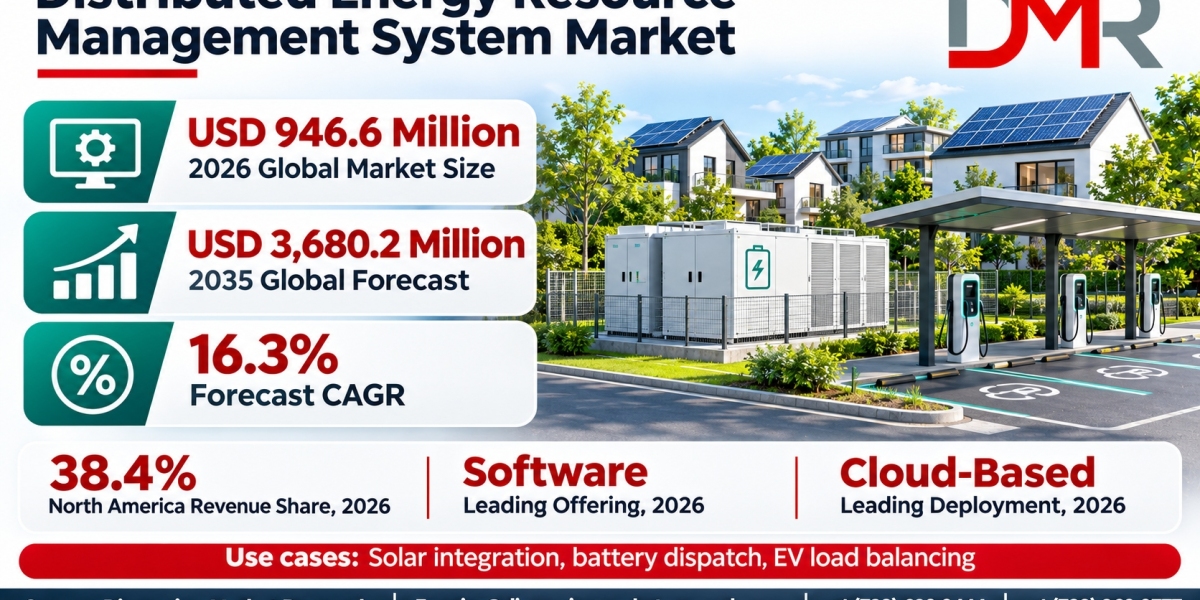

According to Dimension Market Research, the global Distributed Energy Resource Management System Market Size is estimated at USD 946.6 million in 2026 and is projected to reach USD 3,680.2 million by 2035, at a 16.3% CAGR. Growth is tied to the need to coordinate distributed energy assets, improve grid forecasting, and automate demand response as more solar installations and other distributed resources connect to the grid.
For utilities, the operational challenge is knowing which resources are available and when they can respond. A distributed energy resource management system, or DERMS, brings asset data into a common operating view. That visibility can help grid operators anticipate changes in output or demand and coordinate resources when local conditions change.
What Does a Distributed Energy Resource Management System Do?
DERMS software helps utilities and other energy users monitor, forecast, and control resources such as distributed solar and battery storage. For example, a utility can use solar generation forecasts to anticipate lower output later in the day and assess whether storage or flexible demand can help manage the change. The value of coordinating those resources depends on timely data and the ability to act through connected systems.
Distributed Energy Resource Management System Market Size and Share
DMR identifies the following segment leaders in its 2026 estimates. Each percentage refers to a separate dimension of the market.
● Offering. Software leads with an estimated 68.5% share, reflecting demand for forecasting, dispatch, and grid control.
● Deployment model. Cloud-based platforms lead with 59.8%, supported by scalability, remote access, and easier software updates.
● Application. Solar photovoltaic systems lead with 42.8%, reflecting the need to forecast and manage distributed solar output.
● End user. Industrial and utility users lead with 61.4%, driven by grid stability, renewable integration, and energy cost management.
Download PDF Brochure
The report excerpt outlines the study’s coverage by offering, deployment model, application, end user, and region.
Utilities and Industrial Users Have Different Operating Priorities
Utilities adopt DERMS to improve visibility into customer-sited resources and coordinate how those assets respond to grid needs. Forecasting helps operators plan for changes in generation, while management and control tools support dispatch and demand response. Together, these capabilities help utilities incorporate more distributed assets into everyday grid operations.
For industrial users, energy costs and backup power are more immediate concerns. A facility may use demand response to shift flexible loads away from expensive periods while coordinating available on-site resources. The practical question for plant operators is which loads can move without disrupting production. That operating constraint helps determine how much flexibility a site can provide.
Data Integration Shapes Deployment
Cloud deployment can help operators expand coverage and update software across sites. The report also identifies fragmented data formats and inconsistent data quality as barriers. Some utilities use a mix of digital and manual processes, which can make it difficult to share information across systems and bring additional devices into a common workflow.
For suppliers, this makes integration a competitive consideration alongside forecasting and control. A platform’s usefulness depends partly on whether it can receive reliable data from existing systems and support the operator’s workflow. Companies covered in the report include ABB, Oracle, Itron, Eaton, Hitachi Energy, EnergyHub, and Doosan GridTech.
North America Leads as Asia-Pacific Grows Fastest
North America is estimated to account for 38.4% of global DERMS revenue in 2026. The report attributes its position to grid modernization investment, established utility networks, and the presence of major technology providers. DMR estimates the US market at USD 305.7 million in 2026.
Asia-Pacific is projected to grow fastest. Smart grid initiatives and investment in digital infrastructure across China, India, and Japan support demand for tools that help operators incorporate distributed generation into grid planning and control.
Frequently Asked Questions
What is the global Distributed Energy Resource Management System Market Size?
DMR estimates it at USD 946.6 million in 2026 and forecasts USD 3,680.2 million by 2035.
What is the projected DERMS market growth rate?
The projected CAGR is 16.3% from 2026 to 2035.
Which DERMS deployment model leads the market?
Cloud-based deployment leads with an estimated 59.8% share in 2026.
Which application accounts for the largest share?
Solar photovoltaic applications lead with an estimated 42.8% share in 2026.
Which region leads, and which is growing fastest?
North America leads with an estimated 38.4% share in 2026. Asia-Pacific is projected to grow fastest.
Conclusion
The forecast through 2035 reflects a growing need to bring distributed assets into routine grid operations. Solar forecasting, battery coordination, and demand response each benefit from a clearer view of what resources are available. For utilities and industrial users, the value of DERMS will depend on how well these platforms integrate with existing systems and turn asset data into timely operating decisions.
Related Energy Management Market Insights
The Distributed Energy Resources Market Size is estimated at USD 1.0 billion in 2026 and projected to reach USD 4.9 billion by 2035, at a CAGR of 19.9%. The report examines distributed energy assets by grid connectivity and deployment mode, including microgrids.
The Residential Energy Management Market Share report examines energy management at the household level. It estimates North America’s share at 37.9% in 2026 and projects the global market to rise from USD 4.1 billion in 2026 to USD 11.7 billion by 2035.