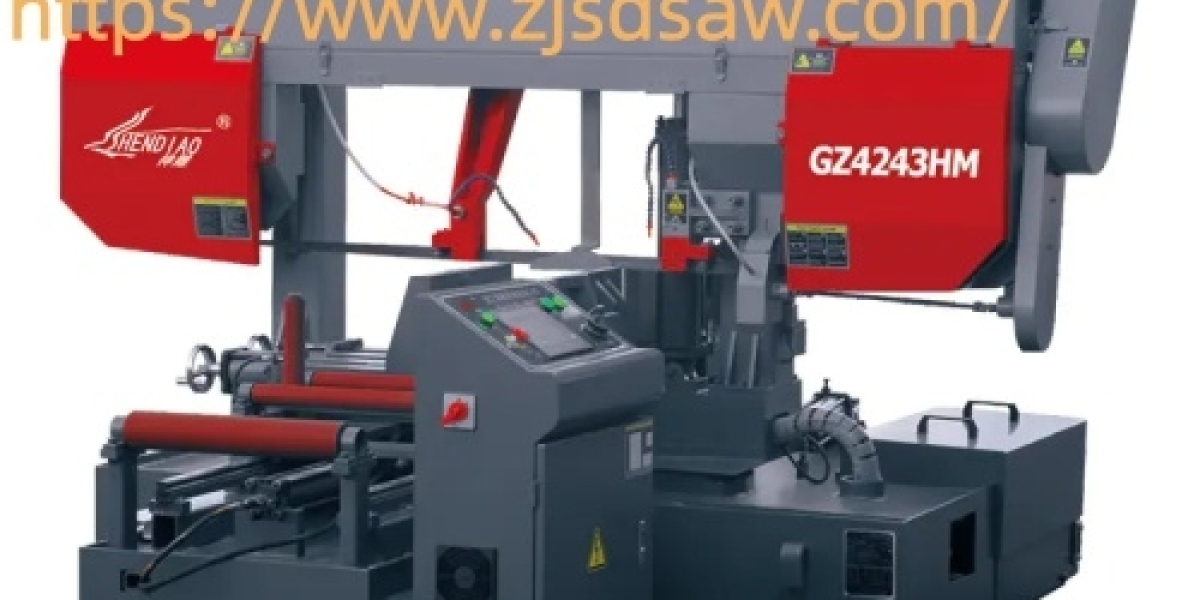

Fully Automatic Angle Cutting Band Saw Machine technology has become an interesting subject for manufacturers looking to manage changing fabrication requirements. In metalworking, not every project involves straightforward cuts. Structural components, machinery parts, and fabricated assemblies may require different angles before they can move into welding, fitting, or further processing. Choosing suitable equipment therefore involves understanding how automation, material positioning, and workshop organization work together.
One challenge in metal fabrication is dealing with changing production orders. A workshop may process different materials throughout the day, with each project requiring its own preparation and cutting arrangement. When operators need to repeat manual adjustments for every new task, production planning can become complicated. Automated equipment offers another approach by bringing several operations into a coordinated process.
Angle processing is particularly relevant to manufacturers working with structural components. Metal frames, support structures, industrial equipment, and fabricated assemblies often contain sections that must fit together at specific angles. The quality of these connections depends partly on how the materials are prepared before assembly. A suitable cutting arrangement can help production teams organize these preparation tasks and reduce unnecessary handling between operations.
Material characteristics should be considered before selecting equipment. Steel sections, stainless steel components, and other metal stock can differ in hardness, shape, and surface condition. Their physical characteristics influence how they should be supported and processed. Buyers should consider the types of materials they regularly handle, whether they work with solid sections or hollow profiles, and how frequently their production requirements change.
The feeding arrangement is another important part of the purchasing decision. In a busy workshop, operators may need to prepare multiple workpieces while coordinating other production activities. An automated feeding arrangement can help organize repeated material movement and reduce the amount of direct manual involvement in routine tasks. However, the suitability of this arrangement depends on the workpiece characteristics and the existing production layout.
Positioning also deserves attention. When components need to meet during welding or assembly, their preparation affects how easily the next production stage can proceed. A coordinated positioning system helps organize the relationship between the material and the processing area. Buyers should examine how the equipment handles material alignment, clamping, and changes between different cutting tasks.
Another interesting development is the integration of digital controls into industrial equipment. Traditional operating arrangements often require operators to make adjustments directly at the machine. Modern control interfaces provide a more organized way to manage processing instructions and switch between working modes. For production teams handling recurring orders, saved operating settings can help simplify preparation when similar jobs return.
However, automation should not be evaluated only by the number of automated functions available. A machine needs to fit the actual working habits of the people who operate it. Clear control layouts, understandable operating procedures, accessible inspection areas, and convenient material loading arrangements all influence daily use. Equipment that fits naturally into existing processes can make staff coordination easier.
Machine structure is equally important. A rigid supporting frame, properly arranged workholding components, and a stable processing assembly contribute to the overall working environment. During equipment evaluation, buyers should examine how the machine is constructed and whether its layout suits the materials and tasks involved. Structural design is not simply an appearance consideration. It is connected to how the equipment is used throughout the working day.
Maintenance is another subject that deserves attention before purchasing. Automated systems include mechanical, electrical, and hydraulic components that require suitable inspection and servicing. Businesses should understand routine maintenance procedures, access to replacement parts, and the technical assistance offered by the supplier. Planning these details early can help production managers organize equipment ownership more effectively.
Factory layout can also influence the selection process. Material storage, loading areas, finished component collection, and operator movement all need to be considered when introducing new equipment. A machine that fits the processing requirements but does not suit the available workspace may create additional handling difficulties. Reviewing the surrounding production environment helps buyers make a more informed decision.
For manufacturers seeking equipment options, supplier experience and product variety are worth examining. Zhejiang Chendiao Machinery Co., Ltd. develops industrial sawing equipment for different manufacturing applications. Its product range includes manual, semi-automatic, automatic, and CNC-related solutions. The company also provides customized equipment development according to different production requirements. These options give industrial buyers room to compare machine arrangements based on their actual fabrication processes.
A thoughtful purchasing decision starts with understanding the work rather than focusing on automation alone. Material compatibility, angle requirements, feeding arrangements, operator experience, maintenance planning, and factory layout should all be considered together. For businesses reviewing equipment configurations and industrial sawing solutions, Chendiao provides product information through its official website at https://www.zjsdsaw.com/ where buyers can examine available equipment and identify options relevant to their manufacturing plans.