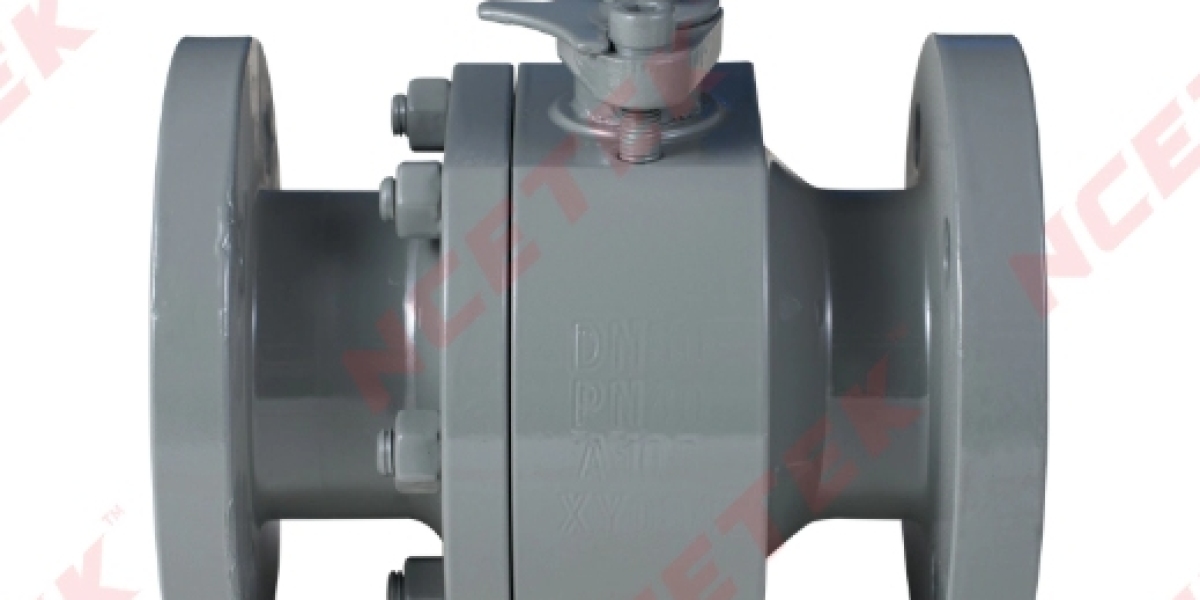

Industrial pipeline systems require reliable valves to control fluid flow, maintain pressure integrity, and support safe operation. For applications involving higher pressure or larger pipeline sizes, valve structure and material quality are especially important. A Cast Steel Trunnion Mounted Ball Valve combines a cast steel body with a trunnion-supported ball, providing stable operation and dependable shutoff when correctly specified for the intended service conditions.
Unlike floating ball valves, trunnion-mounted designs support the ball with fixed trunnions, limiting its movement under pipeline pressure. The seat assemblies create the sealing contact required to control leakage. This structure can help reduce operating torque in suitable applications and is commonly used in oil and gas transmission, petrochemical processing, power generation, and industrial fluid transportation. Actual performance depends on the valve size, pressure rating, seat design, materials, and operating conditions.
Cast steel is widely used for industrial valve bodies because it supports a range of pressure-containing configurations. The appropriate casting material depends on operating temperature, pressure, fluid composition, corrosion conditions, and applicable engineering standards. Carbon steel grades are common in many general industrial applications, while stainless steel or alloy materials may be considered for more specialized environments. Buyers should confirm the material grade and required documentation before placing an order.
Sealing performance is another critical consideration. Trunnion-mounted ball valves may use soft seats or metal-seated configurations depending on the application. Soft seats can provide tight shutoff under compatible operating conditions, while metal seats may be considered for selected high-temperature or abrasive services. Each structure has specific limitations, so selection should account for medium compatibility, temperature range, leakage criteria, and maintenance requirements.
Manufacturing accuracy directly influences valve reliability. The body, ball, stem, trunnions, and seats must meet the specified dimensional tolerances and surface-finish requirements. Proper assembly and alignment help maintain consistent sealing contact and smooth operation. Depending on project requirements, quality inspection may include dimensional checks, material verification, shell pressure testing, seat leakage testing, and operational checks. Testing should follow the applicable standards and agreed acceptance criteria.
These valves are used in oil and gas pipelines, petrochemical plants, gas processing facilities, energy projects, and other industrial installations. Configurations may vary according to the medium, pipeline size, design pressure, and installation environment. Flanged connections are common in many systems, while welded-end options may be available for specific designs. Buyers should verify connection dimensions, pressure class, and installation requirements to ensure compatibility with existing equipment.
Actuation options also affect valve selection. Manual operation may suit some installations, while gear operators can assist with larger valves. Pneumatic and electric actuators may be selected for remote operation or integration into automated pipeline systems. Correct actuator sizing requires consideration of operating torque, pressure differential, valve size, and service conditions. Installation space, maintenance access, and emergency operating requirements should also be evaluated.
Quality assurance should extend through material verification, machining, assembly, and final testing. Buyers may require material certificates, inspection records, pressure-test reports, or third-party verification depending on the application. For critical pipeline projects, features such as fire-safe design, antistatic provisions, or double block and bleed functionality should be explicitly specified and confirmed for the selected model. Clear documentation helps procurement teams assess compliance and reduce project risks.
Before requesting a quotation, buyers should prepare the nominal size, pressure rating, operating temperature, medium, body and seat materials, connection type, actuation method, and applicable design standards. Special requirements should be stated during the inquiry stage so the manufacturer can assess feasibility and recommend a suitable configuration. Complete technical information also helps improve quotation accuracy and production planning.
A properly specified Cast Steel Trunnion Mounted Ball Valve can support dependable isolation in demanding industrial pipeline systems. Zhejiang Naishi Valve Co., Ltd. provides industrial valve solutions for a range of pipeline applications and project requirements. Explore available valve models and technical options at https://www.ncevalve.com/product/.